
Custom sizes & formats
When standard does not fit: rotationally moulded plastic to measure.
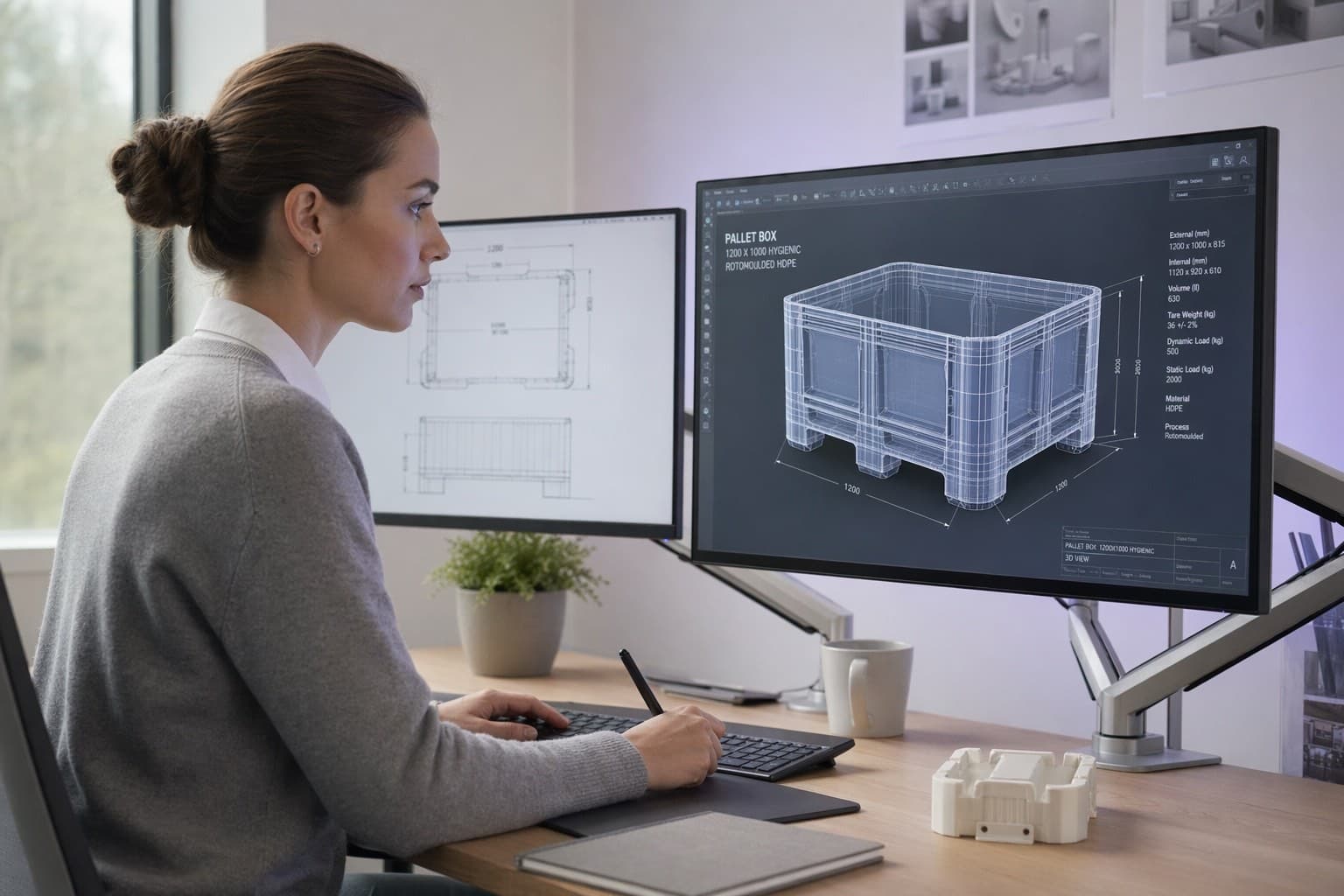
When standard pallet boxes, Euro pallets or dry ice boxes do not match your process geometry, our engineers develop exactly the solution you need. From first sketch through CAD design and rapid prototyping to serial production in Spain — all under one roof, with short decision paths and a single point of contact.
economic minimum quantity for dedicated tooling
lead time: engineering to first article
engineering DE, production ES, sales EU
design, tooling, serial from a single source
When standard does not fit: rotationally moulded plastic to measure.
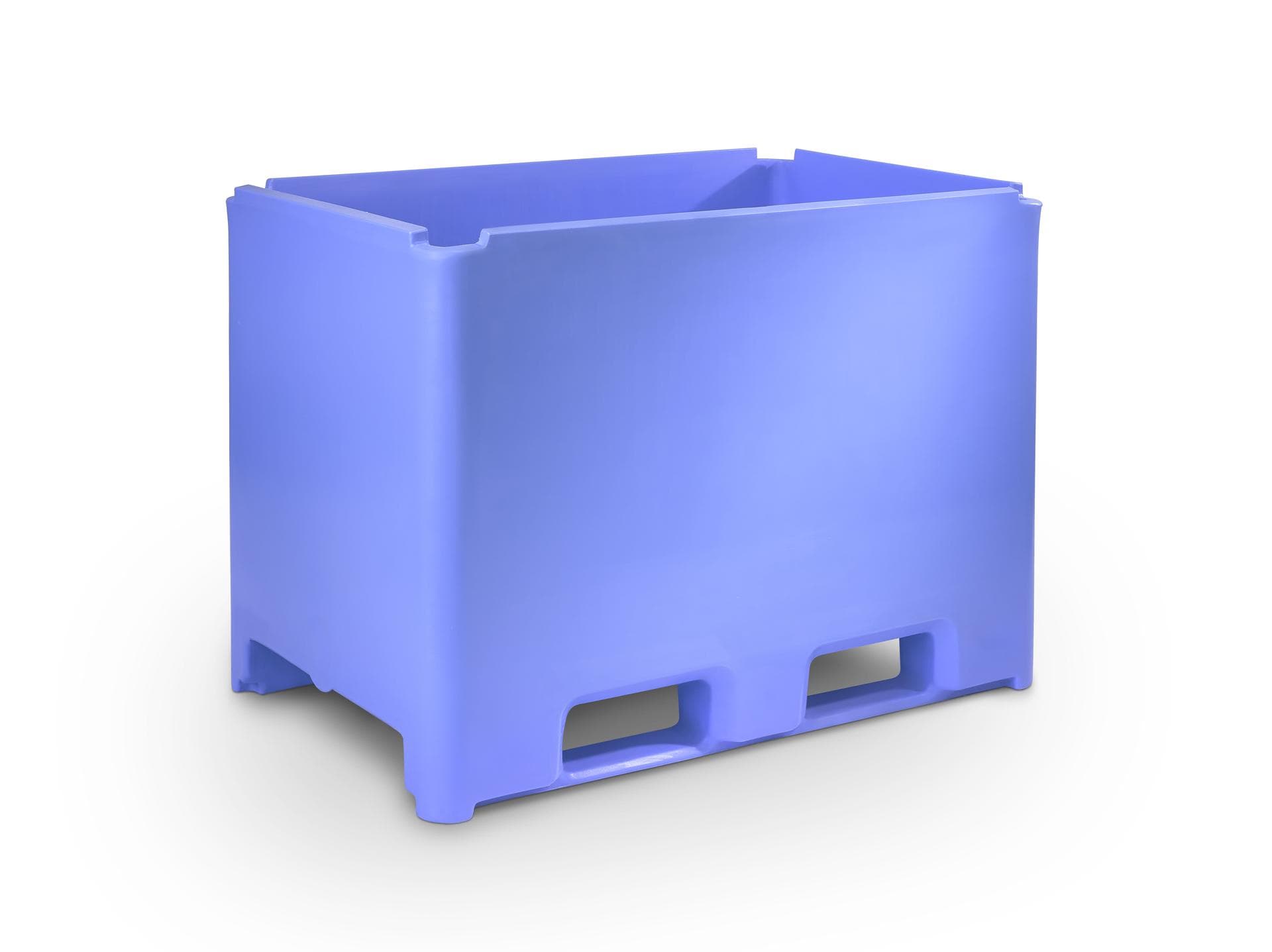
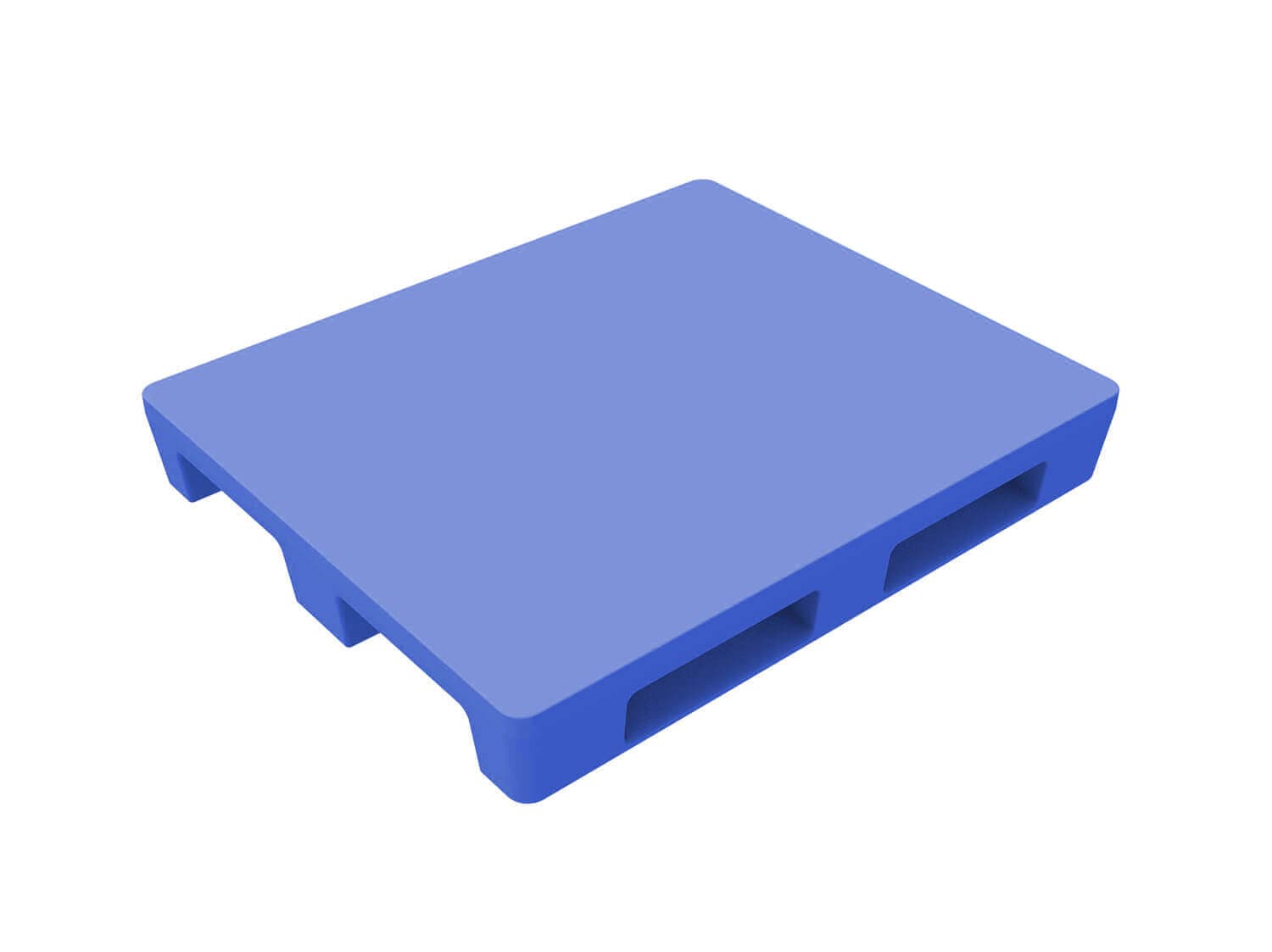
Typical bespoke projects: line-integrated process vessels, spill trays with product-specific geometry, special pallets for robotic grippers, multi-material solutions with stainless steel inserts, colour-coded hygiene zones or containers with in-mould RFID/barcodes. From around 250 units per year we can economically commission a dedicated mould — below that we explore alternatives from the standard portfolio with you.
Your benefit
- One address: design to serial
Engineering, tool making, first article and serial production from one source — no interface losses.
- Rapid prototyping
3D-printed visual and functional samples before tool commitment — validate low-risk.
- Material selected for function
PE-HD, LMDPE, XLPE: we pick the polymer to suit medium, temperature and service life.
- In-mould RFID & barcode
Traceability, pool management and process control — embedded directly in the moulding, without labels.
Rotomoulding — the ideal process for custom formats
When standard containers hit their limits — because dimensions, geometry, inserts or functions deviate from catalogue — rotomoulding is clearly the superior process. The reason is tool economics: rotational tools in aluminium or sheet steel typically cost €15,000–€80,000 instead of the €500,000–€3,000,000 needed for injection moulding or blow moulding. That makes even short runs from 20 units commercially viable.
Geometrically, rotomoulding supports wall thicknesses of 3–12 mm, dimensions up to 4.5 m edge length and volumes up to 25,000 litres in a single part. A unique advantage is the ability to integrate undercuts, double walls (for insulation) and metal inserts (thread bushings, reinforcement plates, drain valves) directly in process — no post-processing, no sealing issues.
For very short runs (one-offs, 1–5 parts) we offer a 'soft-tooling' approach with sheet-metal tools: tooling cost from €6,000, lead time 4–6 weeks. For series parts (from 500 units/year) we optimise the tool for reduced cycle time and higher surface quality.
Design rules, CAD and simulation
Rotomoulding has design rules that differ clearly from injection moulding and blow moulding. Minimum radii on outer and inner edges should be 6× the wall thickness, draft angles typically 1.5–3°, surface stiffening through embossed kickers rather than ribs. Our DfM team (design for manufacturability) reviews every customer drawing against these rules and delivers substantive feedback within 5 working days.
For demanding applications we use FEM simulation (Abaqus, Ansys) to predict mechanical loads, temperature distribution and fatigue life. This is especially relevant for transport containers with static stack loads > 2,000 kg, pressure tanks with internal pressure > 0.5 bar, or parts with dynamic loading (vibration, shock, crash impact).
Material selection covers 20+ raw compounds: LLDPE, MDPE, HDPE, XLPE (cross-linked), PP, PA6, EVOH (barrier), UV-stabilised, flame-retardant (DIN 4102 B1/B2), antistatic, ESD-conductive, food-grade, USP Class VI, FDA-compliant. For specialty applications we compound custom blends on our own micronising line.
Prototype run, serial launch, life-cycle management
Every custom-format project runs through a structured stage-gate process: requirements workshop → DfM review → 3D design → prototype tool → pilot (1–5 parts) → customer acceptance → serial tool (with optimisations from the pilot) → first-article inspection report → serial ramp-up. Typical lead time from kickoff to serial launch: 12–20 weeks.
After serial launch we maintain the tool over the product's entire lifecycle — typically 8–15 years. That includes tool maintenance, change management (as customers evolve geometry or function) and strategic spare-tool inventory for critical parts.
For projects needing IP protection we offer exclusive tools with ownership transfer to the customer, plus NDA-protected development work. This is particularly relevant for OEM supply to automotive, medical devices and defence, where IP protection and spare-parts access over decades must be contractually secured.
The workflow
- 1. Sketch, photo or brief
Start with what you have — hand sketch, photo of the current solution, technical brief. We distil the requirements from there.
- 2. CAD design and functional sample
Our engineering creates the 3D model and a 3D-printed functional sample — you see and feel the solution before the tool is built.
- 3. Tool making
On approval we build the rotational mould in our own tooling department — 8–14 weeks depending on complexity and size.
- 4. First article & acceptance
We produce 5–20 first-article parts, check dimensions, surface and function, and deliver them to you for release.
- 5. Serial production in Spain
After PPAP/release the series runs at our Spanish plant — modern rotational moulding lines, ISO 9001 certified.
- 6. Long-term serial support
Tool, specifications and formulation are retained indefinitely. Reorders are possible even after 10+ years.
Common pitfalls & fixes
- Undefined undercuts
Rotational moulding has limits on complex undercuts — before CAD kickoff we clarify which geometries are manufacturable and where assembled inserts make sense.
- Material without long-term testing
For critical media (aggressive chemicals, UV) we recommend material compatibility testing with PE-plate samples before tool commitment.
- Underestimating volume commitment
Tool costs amortise over volume — when forecasts are uncertain we secure with step pricing and off-take guarantees.
Relevant industries
Frequently asked questions
From what volume is a dedicated tool worthwhile?
From about 250 units per year a dedicated rotational mould is typically economical. We review the business case, volume commitment and possible alternatives from the standard range with you.
How long does it take from sketch to serial production?
Typically 3–6 months: 2–4 weeks CAD and prototypes, 8–14 weeks tool making, 2–4 weeks first article and serial release. Phases shift depending on complexity and material choice.
What are the maximum part sizes possible?
Rotational moulding supports parts up to roughly 3,000 litres volume and 3.5 m edge length. For even larger applications we develop modular solutions.
More applications
Please note: All information on this page – in particular dimensions, technical data, material properties and application recommendations – is provided for general guidance only and is non-binding. The exact specifications tailored to your specific application are agreed on a binding basis as part of the quotation and order process.
Got a project?
Tell us about your requirement — we typically come back with a first assessment within 24 hours.