
Euro pallet (EPAL) vs. hygienic plastic pallet: the honest comparison
Price, tare, load, hygiene, repair, pool exchange — what really matters in daily operation.
EPAL wooden pallets are unbeatable for pool exchange — if you swap Europe-wide, stay with them. New price: ~€10–14.
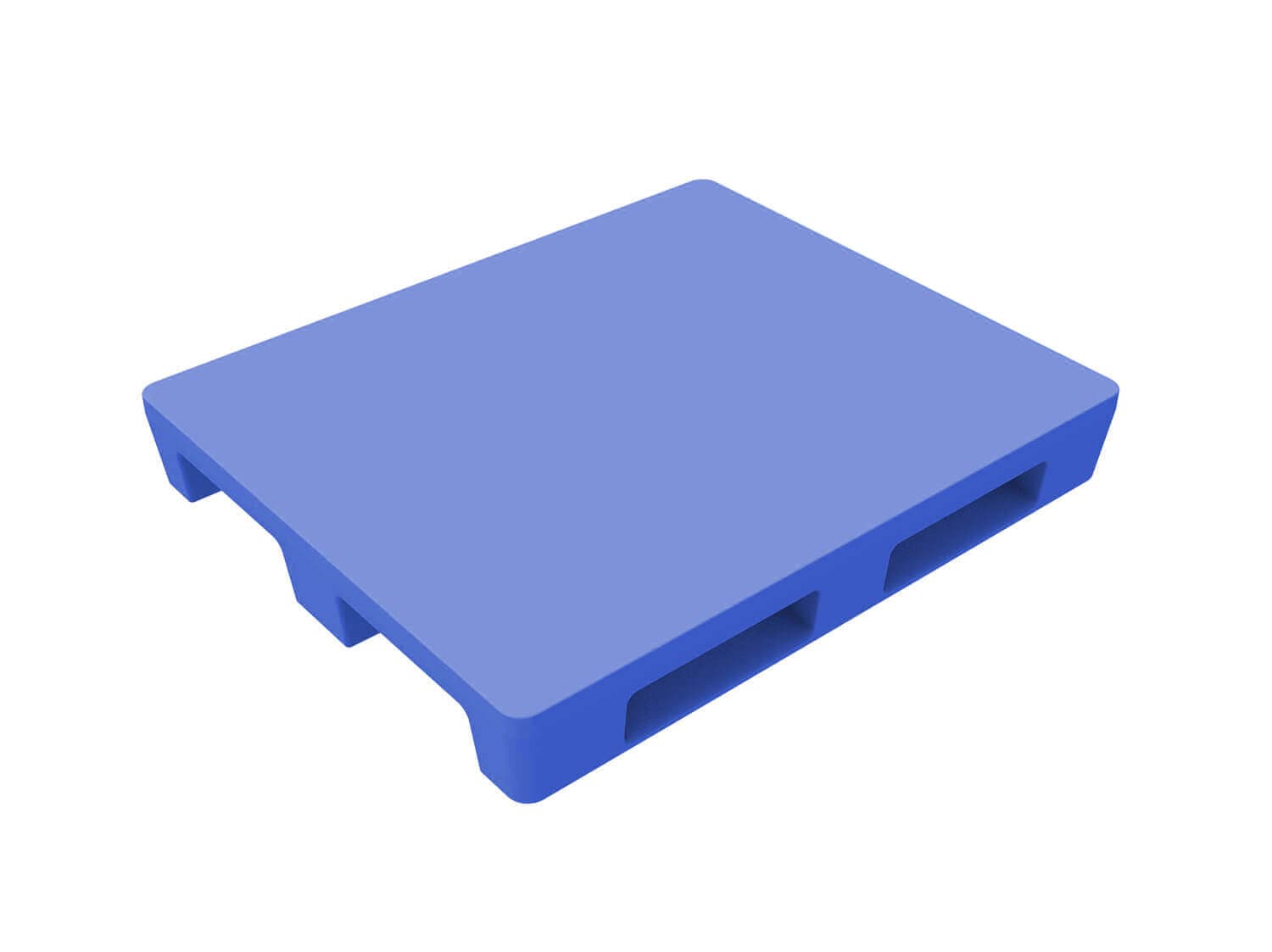
Plastic hygienic pallets win in food, pharma and cleanroom — HACCP-capable, ISPM-15-exempt, life-oriented. Price: ~€70–120.
TCO break-even in typical hygienic use: 18–24 months. Beyond that, plastic saves through longer service life, zero repair spend and a lower failure rate.
The EPAL pool: unbeatable but narrowly scoped
The classic EPAL euro pallet (1200 × 800 mm, ~25 kg) is standardised under EN 13698-1 and interchangeable throughout the EU pool. New price currently ~€10–14, repaired used stock €5–8. If you exchange Europe-wide and move mostly dry goods, stay with the EPAL pool.
Limits: wood absorbs moisture, emits dust, is not approved for HACCP, GMP or cleanroom use, and requires ISPM-15 fumigation for overseas export.
When plastic wins the business case
In food production (meat, dairy, bakery), pharma and chemicals the maths is different: a plastic hygienic pallet typically lives 8–12 years, a wooden pallet in the same setting 1–2 years. Higher capex usually pays back in 18–24 months.
Another lever: wooden pallets in hygiene settings routinely produce cost through cleaning deviations, HACCP findings and recalls. These indirect costs are missing from the typical comparison — and change the picture completely when included.
Load rating and handling
EPAL holds ~4,000 kg static and ~1,500 kg dynamic. Our hygienic pallets in the H version hold up to 6,000 kg static and 1,500 kg dynamic — comparable for handling, better for warehouse stacking.
Weight: EPAL ~25 kg, standard hygienic pallet ~18 kg. That noticeably reduces empty-weight movement in intralogistics — 7 kg less per pallet × 200 pallet moves per day = 1.4 t less mass in motion.
Cleaning and pool strategy
Plastic is cleanable with CIP, foam and high pressure. Wood isn't. If you wash pallets daily (meat, fish, dairy), you cannot run wood economically.
Pool strategies combine both: EPAL for dry goods and outside logistics, plastic for the hygienic core inside. The break point sits at the hygiene airlock between incoming goods and production.
EPAL vs. Rotogal hygienic pallet
| EPAL euro pallet | Rotogal hygienic pallet | |
|---|---|---|
| Material | Wood (kiln-dried) | HDPE (rotomoulded) |
| New price (approx.) | €10–14 | €70–120 |
| Tare weight | ~25 kg | ~18 kg |
| Static load | 4,000 kg | 4,500–6,000 kg |
| Dynamic load | 1,500 kg | 1,500 kg |
| HACCP-suitable | No | Yes |
| ISPM-15 (export) | Fumigation required | Exempt |
| Hygienic service life | 1–2 years | 8–12 years |
| EU pool exchange | Yes | Only via own pool |
Stay with EPAL if …
… you move dry goods in outside logistics and pool exchange is the main lever.
Switch to plastic if …
… hygiene, export, GMP, cleaning cost or lower failure rate drive the decision.
The mixed fleet
Many Rotogal customers run mixed fleets: EPAL outside, plastic hygienic pallet inside from the hygiene airlock onward — best of both worlds.
Frequently asked questions
Can I join the EPAL pool with plastic hygienic pallets?
No — the EPAL pool only exchanges EPAL-certified wooden pallets. Plastic users typically run their own closed pool or use a rental model with tagged pallets.
Do Rotogal hygienic pallets fit EPAL racking and forklifts?
Yes — outer dimensions and fork pockets are EPAL-compatible (1200 × 800 mm, 4-way entry). Existing racking and transport chains work without modification.
What happens when a plastic pallet breaks?
Breakage is rare — we see failure rates below 1 % per year. Broken pallets are 100 % recycled into new non-food components. Wooden pallets by contrast usually end as pallet-repair blocks or firewood.
Does the switch pay off for small operations too?
If hygiene, cleaning or export matter: yes, often faster than for large operations, because failures and HACCP findings are proportionally more expensive. On request we run the business case for your specific pallet count and turnover.
Got a project?
Tell us about your requirement — we typically come back with a first assessment within 24 hours.
More guides
Please note: All information on this page – in particular dimensions, technical data, material properties and application recommendations – is provided for general guidance only and is non-binding. The exact specifications tailored to your specific application are agreed on a binding basis as part of the quotation and order process.
Got a project?
Tell us about your requirement — we typically come back with a first assessment within 24 hours.