
Chemicals
Chemically resistant containers for inert substances and pure materials.
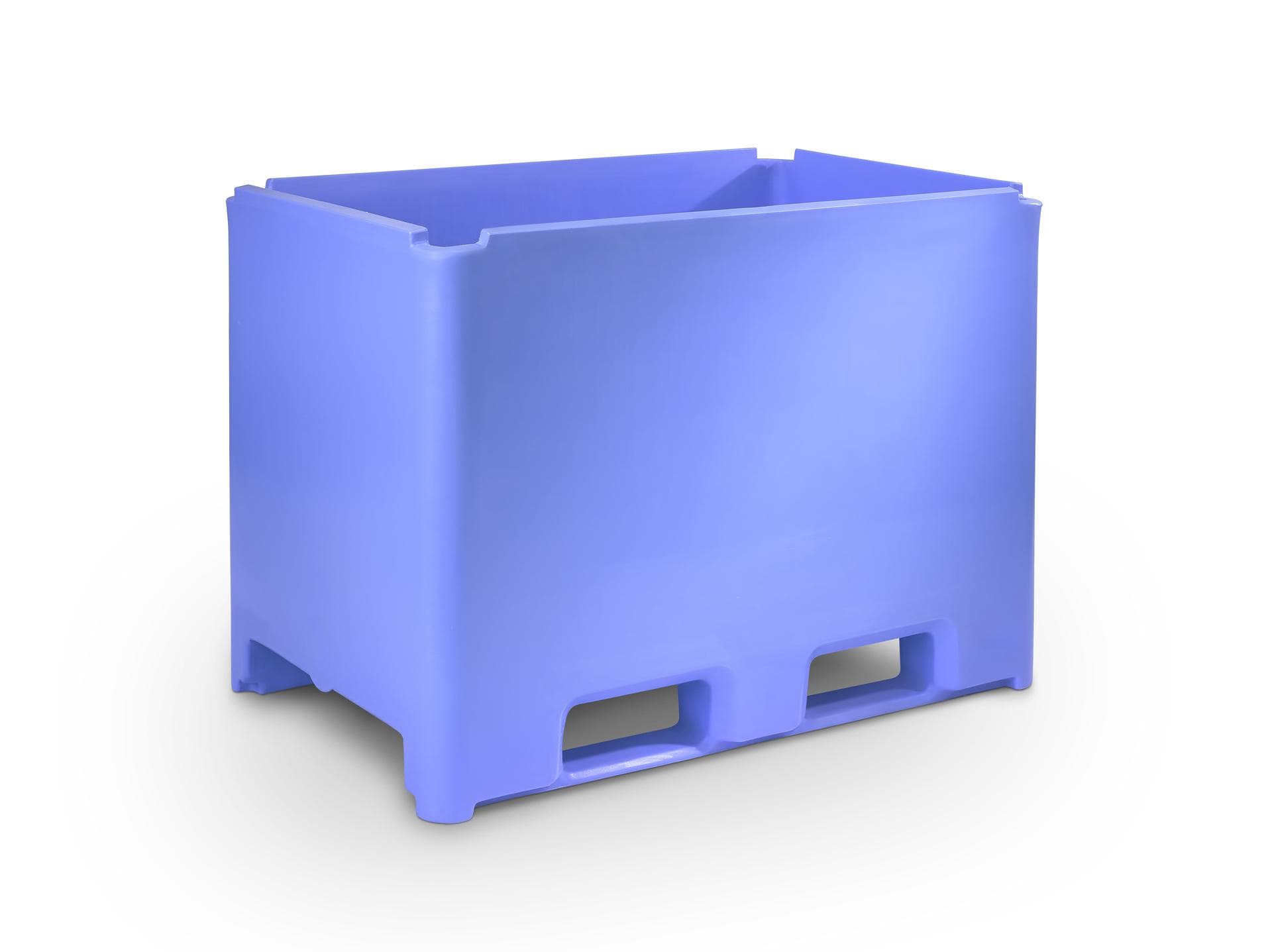
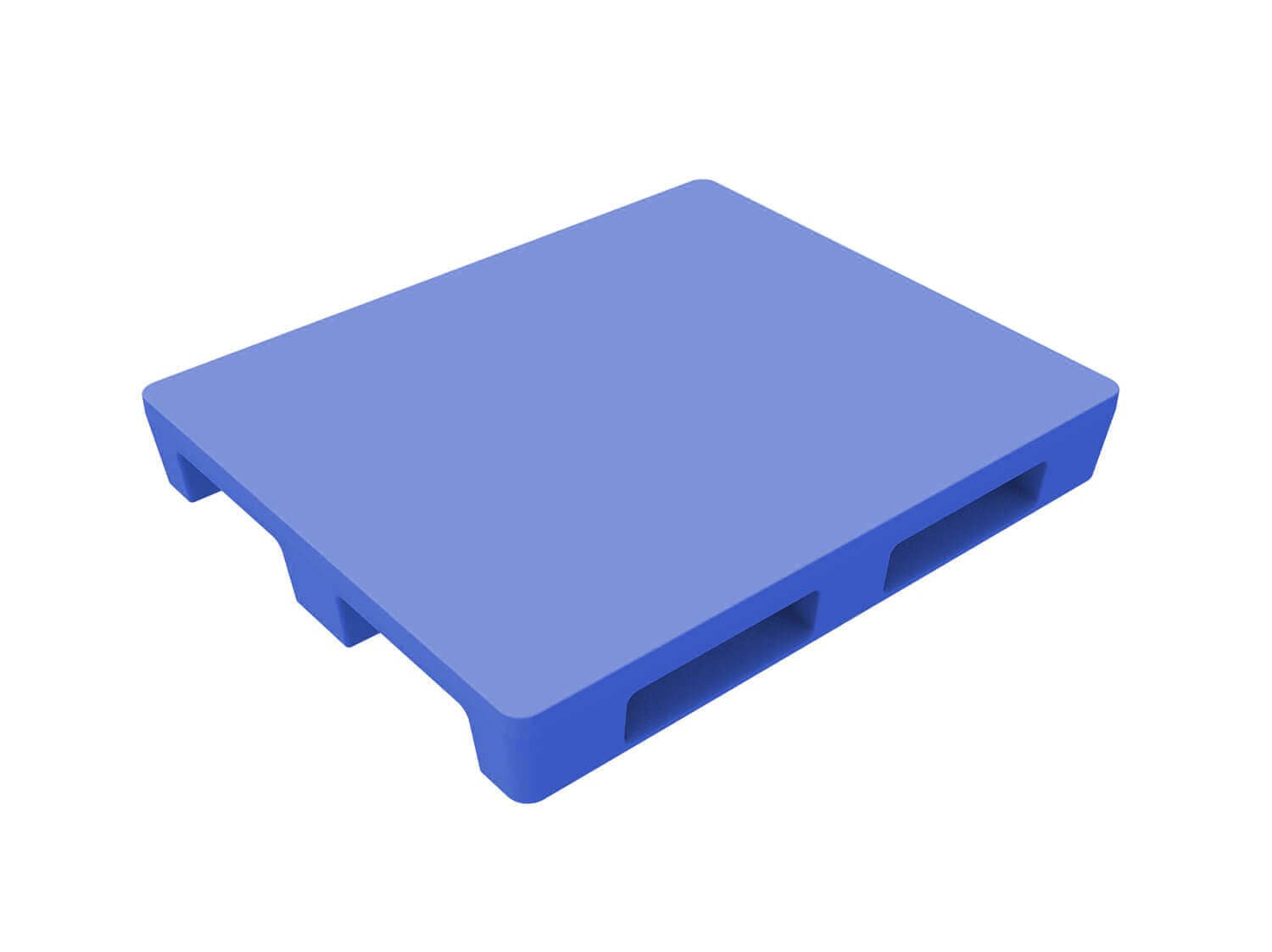
Chemical production and storage environments demand containers that withstand aggressive media, stay leakproof and provide secondary containment volume when things go wrong. Rotogal manufactures closed PE parts that are REACH-compliant and perform as spill trays, transport containers or process vessels in chemical plants.
containment volume heavy-duty spill tray
suitable for all water hazard classes
formulations for multi-year outdoor storage
continuous service temperature (peaks above)
Chemically resistant containers for inert substances and pure materials.
- Chemical resistance
Acids, bases, salts and solvents have different material profiles. Polyethylene provides broad resistance — we advise on your specific media combination.
- Leakproofing and secondary containment
Closed parts without welds — no leakage risk at joints. Spill trays with up to 235 litre containment volume protect your floor.
- UV and weather resistance
For outdoor storage we offer UV-stabilised formulations that remain dimensionally stable after years of exposure.
- Static charge
For flammable media or dusty environments, anti-static material variants are available.
How Rotogal solves them
- Broad material selection
PE-HD, LMDPE, XLPE or HDPE — matched to media profile, temperature range and service life.
- Spill trays up to 235 litres
Rotogal heavy-duty spill trays meet secondary containment requirements (AwSV / SPCC equivalent).
- Leakproof, closed geometry
No internal fixtures, no cavities — ideal for inert chemicals, pigments, powders and pure materials.
- Custom solutions
For non-standard containers, process vessels or dosing systems we design bespoke geometries.
- Life-cycle cost analysis
PE containers are 35–55 % cheaper on TCO than stainless steel — we work through the numbers with you per project.
- Closed-loop recycling
At end of life we take containers back and feed the material into new production — documented circular economy instead of hazardous waste.
Standards & regulation
Registration, Evaluation, Authorisation and Restriction of Chemicals in the EU.
European Agreement concerning the International Carriage of Dangerous Goods by Road.
German ordinance on facilities handling water-hazardous substances — secondary containment requirements.
Determination of resistance to environmental stress cracking in plastics.
ESCR: The underestimated killer of plastic containers
Environmental Stress Cracking Resistance (ESCR) is the ability of a plastic to remain crack-free under simultaneous mechanical stress and exposure to aggressive media. The classic failure mode: a PE container handles acids in a storage test without issue — but cracks within months under load stress plus acid contact. This effect is often overlooked when vetting materials for standard chemical containers.
Rotogal works with cross-linked polyethylene (XLPE) and specifically formulated HDPE grades tested per DIN EN ISO 22088, typically reaching ESCR values > 1,000 h. For your specific media combination we verify — in coordination with our material supplier — whether a standard formulation suffices or a dedicated variant makes more sense. That saves expensive consequential damage from leaks.
In practice: a Rotogal chemical container holds not only statically against the medium, but also under dynamic load with vibration, temperature cycles and mechanical stress. For outdoor storage with wind load, forklift traffic and day/night temperature swings, that is decisive.
AwSV-compliant secondary containment — correctly sized
The German ordinance on facilities handling water-hazardous substances (AwSV) requires retention systems for storage and filling plants that safely capture leaking media in the event of a release. Base rule: retention volume must at least equal the volume of the largest single container — for water hazard class WGK 3, often plus safety margin.
Our rotationally moulded spill tray 1,235 × 1,035 × 230 mm offers 235 litres of containment — enough for one 200-l standard drum plus a 17.5 % reserve. The PE construction is chemically more broadly resistant than steel trays with epoxy coating (which are vulnerable at edges) and is easy to clean if a spill does occur.
For larger containers or multi-storage positions we design custom tray geometries up to pallet dimensions. Double-wall construction, integrated leak indicators and drain valves can be designed directly into the part for custom projects — without welds and therefore without additional tightness risk points.
ADR transport: When plastic IBCs are permitted
The European Agreement concerning the International Carriage of Dangerous Goods by Road (ADR) governs chemical transport in national and international traffic. For hazard classes 3 (flammable liquids), 6.1 (toxic substances), 8 (corrosive substances) and 9 (miscellaneous dangerous substances), plastic IBCs (Intermediate Bulk Containers) as 31H1/31H2-approved designs are possible once they have passed the corresponding type tests.
Rotogal containers are supplied by default as process and transport vessels without ADR approval. For projects with dangerous-goods transport requirements we deliver certified designs on request in cooperation with accredited type-approval bodies — tuned to the specific UN number and packing group depending on medium and transport route.
For on-site transport within a plant (outside the ADR scope), our standard containers are usually directly usable. That applies to in-plant intermediate storage, filling, dosing and sampling — all applications where robust, chemically resistant PE designs clearly outperform the classic stainless steel vessel.
You need Rotogal when …
- You store water-hazardous substances (WGK 1–3) and need spill trays sized per AwSV.
- Your chemicals combine aggressive media with mechanical stress — ESCR becomes a real issue.
- You need UV-stable PE containers for years of outdoor storage without embrittlement or colour fade.
- Your application demands anti-static material variants for flammable or dust-generating media.
- You are planning a dangerous-goods transport (ADR) and need certified IBC designs (31H1/31H2).
- You are looking for an alternative to welded stainless-steel trays with better chemical resistance and lower TCO.
Glossary
- ESCR
- Environmental Stress Cracking Resistance — resistance to cracking under simultaneous media exposure and mechanical stress. Central parameter for PE containers in the chemical industry.
- WGK (Wassergefährdungsklasse)
- German classification of water-hazardous substances: WGK 1 (slight), WGK 2 (obvious), WGK 3 (severe). Defines requirements for retention systems under AwSV.
- IBC (31H1 / 31H2)
- Intermediate Bulk Container in plastic: type approvals 31H1 (rigid) and 31H2 (with inner receptacle and outer jacketing) for ADR-compliant dangerous goods transport.
- XLPE / LMDPE
- Cross-linked polyethylene (XLPE) and Linear Medium Density Polyethylene (LMDPE). Both material variants offer higher ESCR and mechanical strength than standard HDPE.
- REACH
- Registration, Evaluation, Authorisation and Restriction of Chemicals — EU regulation (EC) 1907/2006. Requires registration of all chemicals placed on the market and regulates their assessment.

Frequently asked questions
Which chemicals are compatible with your PE containers?
Polyethylene is resistant to most aqueous acids and bases, salt solutions, alcohols and many organic solvents. For aromatic hydrocarbons, chlorinated solvents or strongly oxidising acids we recommend XLPE or a detailed assessment — we are happy to advise on your specific media combination.
Can the containers be used for dangerous goods transport (ADR)?
For ADR-compliant intermediate bulk containers (IBC) we deliver certified designs on request. Standard containers can serve as transport units in combination with suitable overpacks — the specific classification is clarified per project.
How large must spill trays be dimensioned according to AwSV?
Typically the volume of the largest single container plus a safety margin (usually 10 %) is required. Our 1,235 × 1,035 × 230 mm spill tray provides 235 litres of containment — suitable for most 200-litre drums.
What is the difference between HDPE and XLPE in chemical use?
HDPE (High Density Polyethylene) is thermoplastic and therefore easier to recycle. XLPE is cross-linked — making it more temperature-stable, more ESCR-resistant and dimensionally stable under long-term stress, but no longer thermally reprocessable. For aggressive media combinations we recommend XLPE.
Can we get containers with integrated fill or drain openings?
Yes. We mould fill sockets, drain openings, overflow pipes, sensor bosses and manholes directly into the part — without welds and without additional tightness risk points. Typical connection sizes: DN 50 to DN 200, others on a project basis.
How does PE behave under UV and weather exposure in outdoor storage?
Our UV-stabilised PE formulations are qualified for multi-year outdoor storage. Typical measures: carbon-black or titanium-dioxide-based UV blockers, HALS stabilisers (Hindered Amine Light Stabilizers) and, if needed, pigmentation. After 5 years of outdoor exposure we expect max. 5 % loss of impact toughness.
Do you offer anti-static or conductive variants for ATEX zones?
Yes. For ATEX zones we produce PE variants with surface resistance < 10⁹ Ω. We match material choice to zone 1/2 (gas) or zone 21/22 (dust) — with certification and a matching equipotential bonding connection on request.
More industries
Please note: All information on this page – in particular dimensions, technical data, material properties and application recommendations – is provided for general guidance only and is non-binding. The exact specifications tailored to your specific application are agreed on a binding basis as part of the quotation and order process.
Got a project?
Tell us about your requirement — we typically come back with a first assessment within 24 hours.