
Logistics & intralogistics
High-capacity pallets for automated hygiene warehouses.
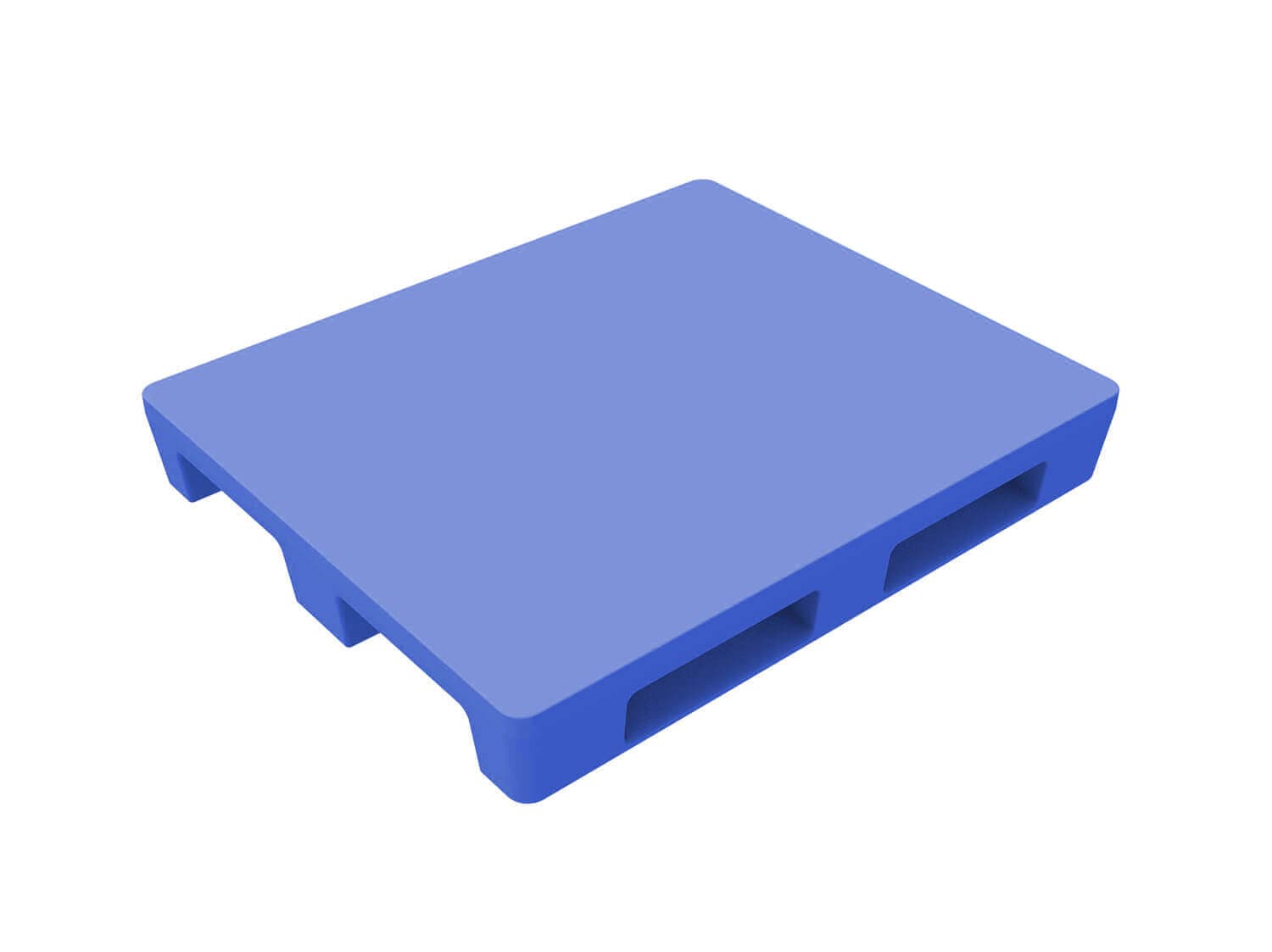
Automated warehouses, AGV systems and high-bay facilities place extreme demands on pallets: exact dimensions, defined entry/exit profiles, lasting dimensional stability after millions of handling cycles. Rotogal plastic pallets are closed, seam-free and rated for up to 5,000 kg static load — as robust as wood, hygienically superior and with a predictable service life.
static load — heavy-duty variant
dynamic load in AGV operation
service life in 3-shift operation
dimensional tolerance for high-bay systems
High-capacity pallets for automated hygiene warehouses.
- Dimensional accuracy for stacker cranes
The smallest deviations bring high-bay warehouses to a halt. Rotogal pallets hold dimensions and profile throughout their service life.
- Cold storage down to −30 °C
Wood becomes brittle, standard plastics become glassy. Our polyethylene stays impact-tough and flexible.
- Cleaning between batches
Automated wash lines need pallets that withstand high pressure and detergents — without water absorption.
- Pool compatibility
With 1,200 × 1,000 mm and 1,200 × 800 mm standard sizes and anti-slip options, Rotogal pallets integrate into existing logistics chains.
How Rotogal solves them
- Up to 5,000 kg static load
Heavy-duty variants for high-bay racks and automated systems with frequent load cycles.
- Seam-free surfaces
No nail gaps, no fibres, no foreign particles — ideal for hygiene warehouses in food and pharma.
- Long, predictable service life
Up to 10× longer useful life than wooden pallets — with full recyclability at end of life.
- Anti-slip and closed-deck variants
For autonomous conveyor systems where load securing must work without extra material.
- Tolerances for process automation
Dimensional tolerances ≤ 1 mm over the full service life — stacker cranes, AutoStore and AGV fleets run reliably.
- Closed CO₂ loop
Take-back, recycling and new production in a closed loop — demonstrably more favourable than wooden pallets across the full life cycle.
Standards & regulation
Repair and traceability of plastic pallets in pool operations.
Test methods and requirements for flat pallets in material handling.
Dimensions and qualities of four-way flat pallets (including 800 × 1,200 mm Euro pallet).
Container design in automotive logistics — reference for standardised intralogistics.
Automation: Why wooden and standard pallets fail
In an automated high-bay warehouse with stacker cranes, AutoStore grids or AGV fleets, pallets are not driven but positioned to the centimetre. Sensors check entry profiles, edge radii and overhangs. Even 2 mm of dimensional deviation or one loose board can bring things to a halt — with consequential costs in the five-digit range per hour.
Wooden pallets deform under load, absorb moisture, splinter at the corners and are not process-capable for fully automated environments. Standard injection-moulded plastic pallets suffer from other issues: weld seams, thin wall sections at highly stressed points and a tendency to crack under impact loads.
Rotogal pallets are rotationally moulded — a process that produces low-stress, seam-free, one-piece parts with uniform wall thickness. Geometry is defined to the millimetre, the profile stable over the entire service life. For automated systems that means process reliability — and for the operator: fewer downtime tickets, fewer rejected pallets, less supply-chain stress.
Pool management per ISO 18613: Sustainably plannable
ISO 18613 defines requirements for repair, quality inspection and traceability of plastic pallets in pool operation. For operators with exchange systems (food retail, automotive, parcel services) this is the basis for predictable stocks, loss rates and circular-economy balances.
Rotogal supports pool operators with serialised pallets (in-mould RFID or embedded barcode), repairability (damaged individual elements can be refurbished by welding or hot-air processes) and documented batch traceability. For high-cycle-count projects we integrate your pool numbering directly into the tool geometry — eliminating separate labelling.
At end of life the pallet is fully recyclable by polymer type. We take Rotogal pallets back within our return system and feed the material back into new production — demonstrably a lower overall CO₂ balance than wooden pallets, even accounting for their recycling share.
Cold store and wet zone: PE where wood and steel fail
In cold storage at −25 °C to −30 °C, pallets become problem parts: wood splinters under impact, tubular steel conducts heat into the goods (energy losses in the four- to five-digit annual range), painted surfaces crack off. Standard PP injection-moulded plastics become brittle below −15 °C and lose impact toughness to the point of complete failure.
Rotogal pallets of LMDPE stay dimensionally stable and impact-tough at −30 °C. The material's low melt index and controlled crystalline structure guarantee consistent mechanical behaviour across the full operating temperature range. Repeated temperature cycles between cold store and room climate do no structural damage either — no water ingress, no internal ice formation, no cracking.
For wet zones (wash, cleaning and disinfection lines) the same applies: no water absorption, no swelling, no deposits at seam lines. The pallet goes through cleaning cycles as easily as the container it carries — a key building block in closed hygiene loops.
You need Rotogal when …
- Your high-bay warehouse runs fully automated with stacker cranes and demands process-capable tolerances.
- You operate deep-freeze areas down to −30 °C and face problems with brittle-becoming standard pallets.
- Your intralogistics switches between hygiene production (wash/disinfection lines) and classic palletising.
- You are planning an AGV/AMR system and need pallets with defined undersides and anti-slip surfaces.
- You want to document your exchange-pool balance with serialised, repairable pallets per ISO 18613.
- You are seeking sustainable alternatives to wooden pallets with a documented recycling loop and 10× longer service life.
Glossary
- Regalbediengerät (RBG)
- Automated vehicle in high-bay warehouses that moves pallets between storage location and transfer conveyor. Requires dimensionally accurate, seam-free pallets with defined entry profiles.
- FTS / AGV / AMR
- Automated Guided Vehicles (AGV) and Autonomous Mobile Robots (AMR). Difference: AGVs follow a fixed path, AMRs navigate freely via SLAM sensors.
- Statische vs. dynamische Last
- Static load = weight the pallet may carry in a rack. Dynamic load = weight during motion (transport, load cycles). Dynamic is typically 30–50 % of static load.
- Europalette vs. Industriepalette
- Euro pallet: 800 × 1,200 mm per UIC 435-2 / DIN 15146. Industry pallet: 1,000 × 1,200 mm — common in chemicals, pharma and food industries for larger packs.
- Pool-Betrieb
- Pallet exchange system with central pool manager. Users swap loaded for empty, inspected pallets — requires serialised, repairable pallets traceable per ISO 18613.
Matching products
Frequently asked questions
Do the pallets fit in high-bay warehouses with automated stacker cranes?
Yes. We produce in Euro-pallet size (1,200 × 800 mm) and industry size (1,200 × 1,000 mm) with tight tolerances. For specific rack systems we individually tune profile, foot shape and entry radii.
How long do the pallets last in 3-shift operations?
Depending on profile and usage we count on 8–15 years of service life. The closed construction absorbs no water, barely ages and does not lose load capacity even after millions of handling cycles.
Are the pallets suitable for AGV systems?
Yes. We offer variants with closed undersides and anti-slip surfaces that can be handled in AGV fleets as reliably as in conventional forklift environments.
How do you repair damaged pallets in pool operation?
Minor damage (cracks, deformations) is repaired locally by hot-air or extrusion welding — in compliance with ISO 18613 quality requirements. For larger damage we recommend polymer-pure recycling in a closed loop; we take pallets back.
How do your pallets behave in a fire?
Standard PE has a fire classification similar to wood and meets DIN 4102 B2 (normally flammable). On request we deliver flame-retardant variants (B1 hard to ignite) suitable for high-bay warehouses with strict fire-protection requirements. We support sprinkler design and insurance assessments as needed.
Can we get pallets with our logo and pool numbering?
Yes. We mould your logo, a pool serial number, barcodes or RFID tags directly into the tool — permanent, abrasion-resistant, without stick-on labels. From around 200 pallets a dedicated tool modification pays off; for larger orders we use insert changers where needed.
What is the CO₂ balance compared to wooden pallets?
Over the life cycle the CO₂ balance of our PE pallets is around 20–30 % lower than that of wooden pallets — despite the higher CO₂ intensity of raw-material production. Key drivers are the 10× longer service life, full recyclability and lower transport weight per pallet use.
More industries
Please note: All information on this page – in particular dimensions, technical data, material properties and application recommendations – is provided for general guidance only and is non-binding. The exact specifications tailored to your specific application are agreed on a binding basis as part of the quotation and order process.
Got a project?
Tell us about your requirement — we typically come back with a first assessment within 24 hours.