
Dry ice logistics & cold chain
Only 10 % sublimation loss over 48 hours.
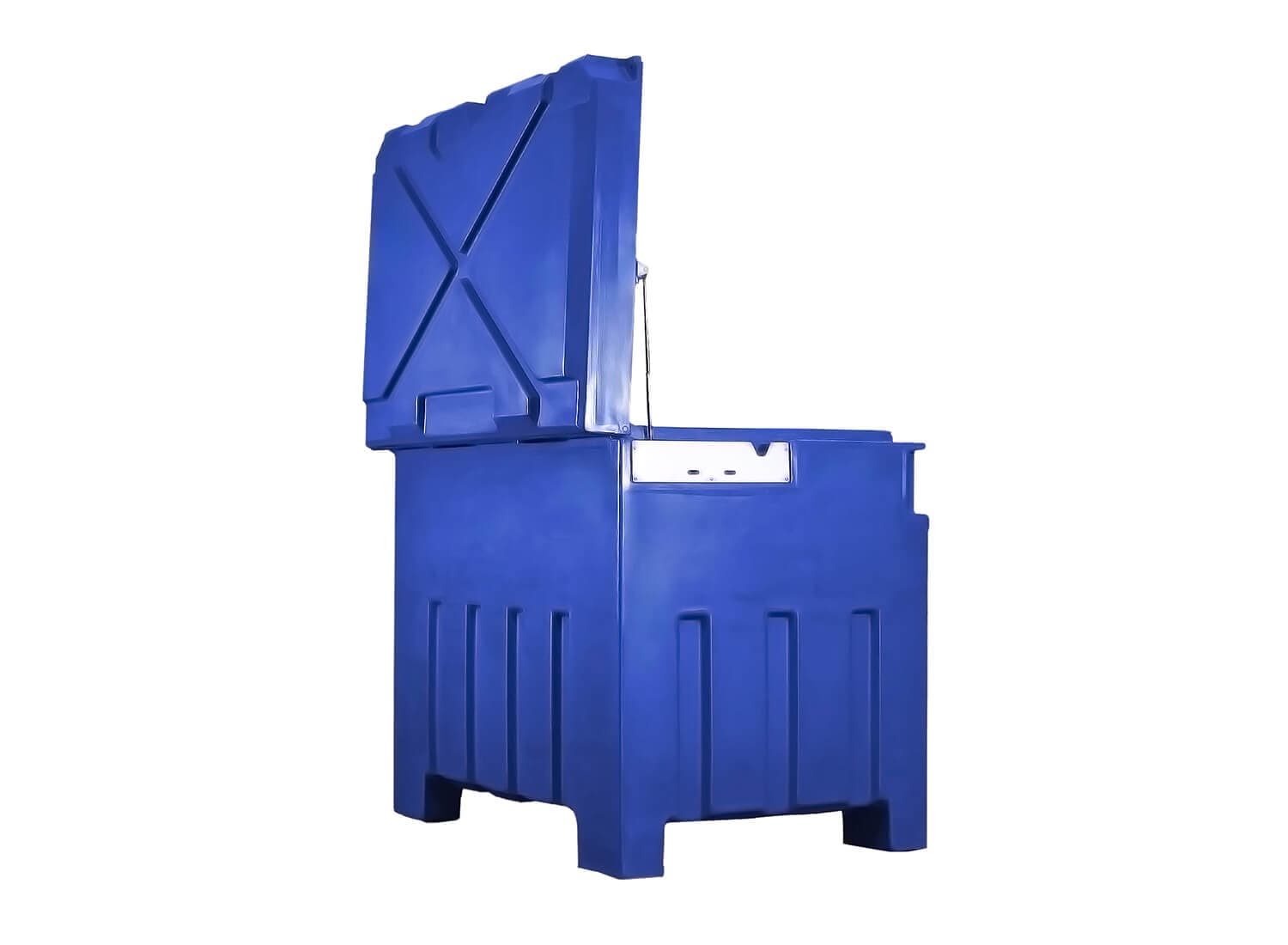
Dry ice is a premium medium: expensive to produce, volatile in storage. The Rotogal BHS-500.2 holds 400 kg of dry ice with only around 10 % sublimation loss over 48 hours — a very good figure for producers, CO2 blast cleaning providers and the pharma and food cold chain.
dry ice capacity BHS-500.2
sublimation rate at full load
thermal conductivity of 80 mm PUR insulation
empty — 4× loaded (max 2,280 kg)
Only 10 % sublimation loss over 48 hours.
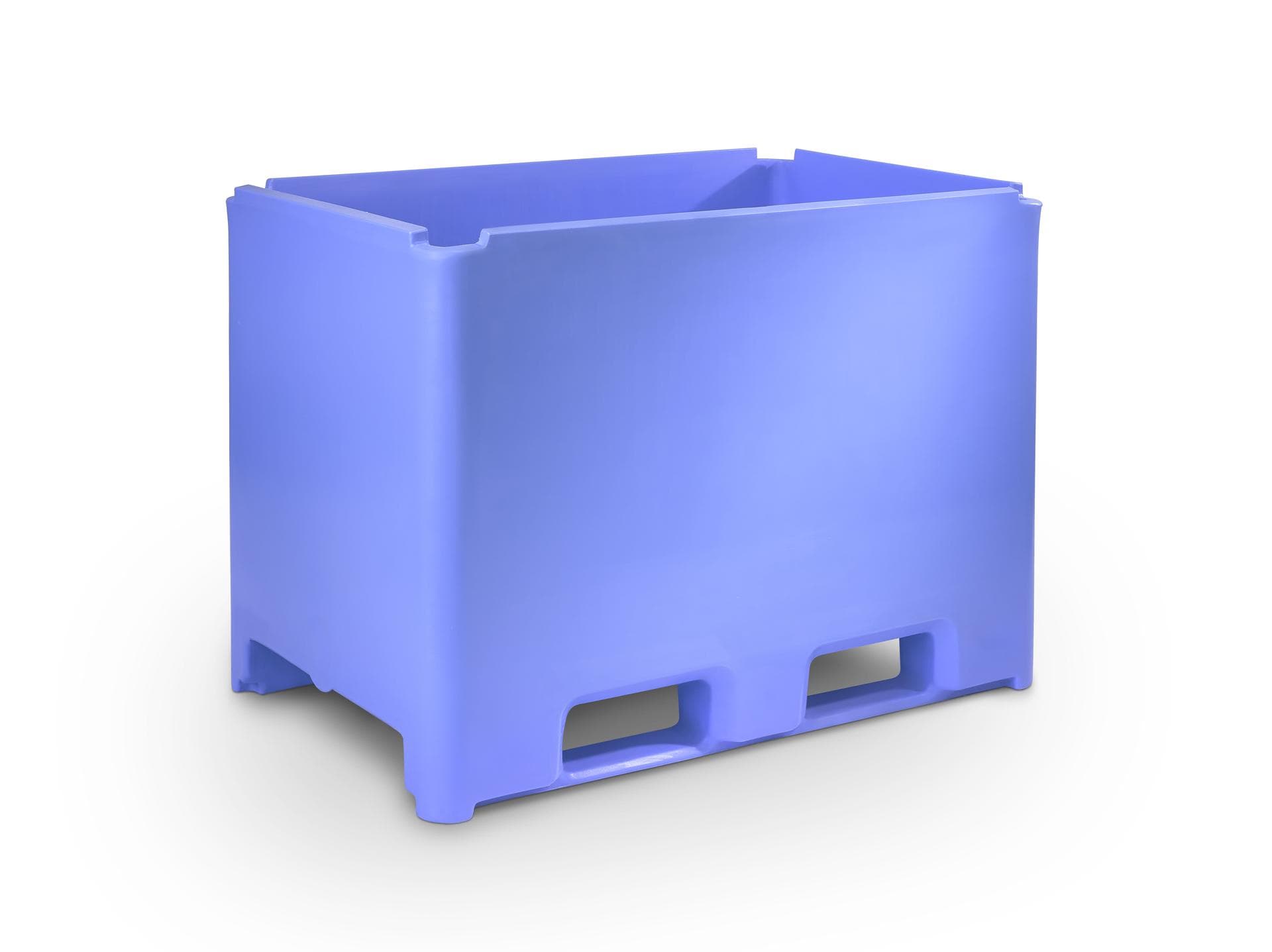
Whether a pharma company transports temperature-critical substances overnight, a cleaning company delivers dry ice to a customer site, or a food producer needs to bridge a cold chain: the BHS-500.2 delivers reliable temperature profiles. Used as interim storage at the production site or as a mobile transport box on a Euro pallet.
Your benefit
- Thermal conductivity 0.02372 W/mK
80 mm PUR insulation — among the best values on the market for dry ice transport boxes.
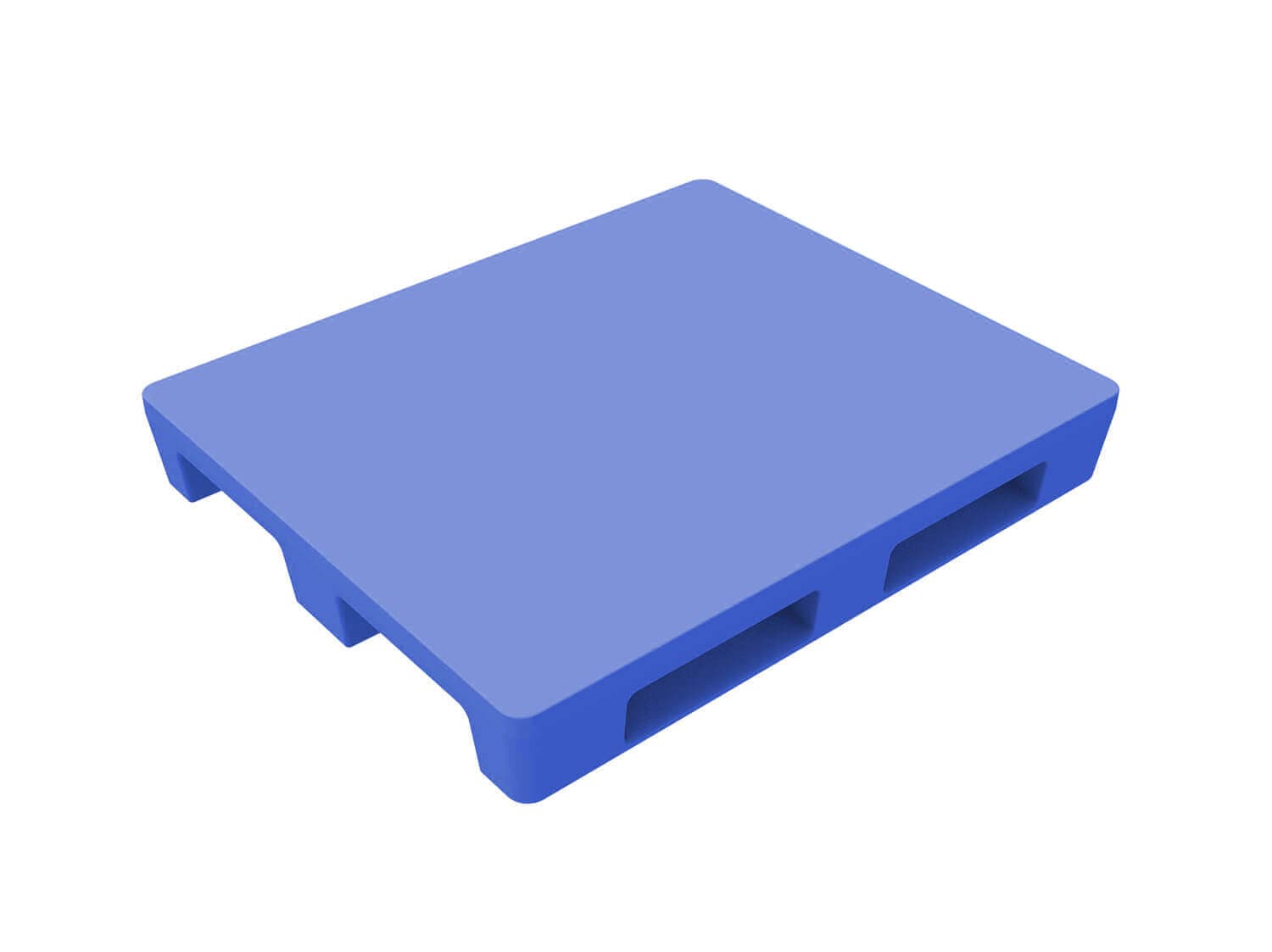
- Euro-pallet footprint 1,200 × 800
Integrates seamlessly into existing logistics and vehicle configurations — no special handling.
- Stackable up to 5 units
5 high empty, 4 high loaded (2,280 kg max) — efficient use of storage footprint.
- Food-grade LMDPE
Direct contact with food or pharmaceutical intermediates is permitted.
Physics of the passive cold chain
Dry ice (solid CO₂, sublimation temperature −78.5 °C) is the standard coolant for temperature-sensitive supply chains from −70 °C deep-freeze (mRNA vaccines, specialty chemicals) down to −20 °C Surlyn and dry-ice blasting. The challenge is not the temperature itself but sublimation loss: a poorly insulated container loses 8–15 % of dry ice per day, a well-insulated one less than 4 %.
The key parameter is therefore insulation thermal conductivity. 80 mm high-density PUR foam (λ = 0.02372 W/mK) yields about 21 W/m² heat transfer at 20 °C ambient and −78.5 °C interior — equivalent to about 3 kg dry-ice loss per day per m² external surface. For a 600-litre container that means a 5–7 day hold time with a 50 kg dry-ice charge.
The seamless rotomoulded shell is decisive here. Where welded containers typically show thermal bridges with 5–8 W/m² extra loss at seams, our process has none. That increases effective cooling time by 15–25 % over welded products of identical wall thickness.
Dangerous goods, UN 1845 and IATA transport
Dry ice is UN 1845 dangerous goods (class 9). Road (ADR), sea (IMDG) and air (IATA DGR) transport all have specific labelling, packaging and documentation duties. Our containers come with pressure-release vents that reliably relieve overpressure above 0.7 bar — mandatory because sublimed CO₂ can generate up to 6 bar if the vent is missing.
For air transport, net-weight limits per container apply: 2.5 kg dry ice on passenger aircraft, up to 200 kg per package on cargo aircraft. Our standard containers are sized so the authorised load is clearly documented and the packaging matches the UN certification (4G or 4H2 marking).
An often overlooked aspect is CO₂ concentration in the cargo hold. On longer transports with high dry-ice loads, CO₂ can rise above 5 % — dangerous for drivers and handlers. Our containers have a documented sublimation rate from which the necessary ventilation rate can be calculated precisely.
mRNA and specialty-pharma cold chain
Since 2020 the −70 °C cold chain for mRNA vaccines (Pfizer-BioNTech: −90 °C to −60 °C) has been a pharma-logistics headline. Active cooling (ULT freezers) requires power, monitoring and maintenance; passive dry-ice cooling is infrastructure-independent and ideal for the last mile or as redundancy during power outages.
Our pharma-grade dry-ice containers meet GDP (Good Distribution Practice) and WHO-PQS requirements: conditioned interiors with reproducible temperature distribution, logger slots, and full temperature-mapping documentation. Containers can be individualised for IQ/OQ qualification with customer protocols.
For secondary packaging of cell therapeutics and biologicals we offer insulated inner boxes with USP-Class-VI-certified contact surfaces. That enables a GMP-compliant dry-ice cold chain with documented traceability to the end customer.
The workflow
- 1. Calculate dry ice demand
Transport duration, ambient temperature, loading pattern — we compute expected sublimation loss and recommend loading amount.
- 2. Check logistics compatibility
Euro-pallet footprint, stacking height, truck configuration — the BHS-500.2 fits standard logistics without special handling.
- 3. Data logger integration
For validated cold chains (GMP) we integrate data logger ports and temperature profile documentation.
- 4. Test shipment
Before serial ordering: test 1–2 boxes on your real transport route — we evaluate temperature and sublimation data with you.
- 5. Serial delivery
Typical lead time 4–6 weeks for standard BHS-500.2; for special equipment (castors, sensors) plan 8–12 weeks.
- 6. IATA and ADR training
For air transport or cross-border road, we support your UN 1845 documentation and driver training.
Common pitfalls & fixes
- Under-loading the box
The less dry ice, the faster it sublimes. We recommend at least 70 % loading for stable temperature profiles.
- CO₂ accumulation in closed rooms
Subliming dry ice generates CO₂. Always store boxes in ventilated areas — suffocation risk in confined rooms is real.
- Planning data loggers too late
For GMP cold chains, data logger ports must be designed into the geometry — retrofitting later compromises insulation.
Frequently asked questions
What transport duration is the BHS-500.2 designed for?
With 400 kg of dry ice, reliable use up to 72 hours is possible. After 48 hours typically ~360 kg remain in the box — sufficient for most shipments within Europe.
Is the box suitable for air transport?
Dry ice as a transport article is subject to IATA DGR UN 1845. The box itself meets the requirements for insulation and sealing; the currently applicable IATA classification must be observed per shipment.
Are the boxes also available with castors?
The BHS-500.2 is designed for Euro-pallet handling. For castor or runner versions we develop bespoke variants — talk to us.
More applications
Please note: All information on this page – in particular dimensions, technical data, material properties and application recommendations – is provided for general guidance only and is non-binding. The exact specifications tailored to your specific application are agreed on a binding basis as part of the quotation and order process.
Got a project?
Tell us about your requirement — we typically come back with a first assessment within 24 hours.