
Deep-freeze intralogistics
Down to −40 °C: pallet boxes and pallets that stay tough in frost instead of shattering.
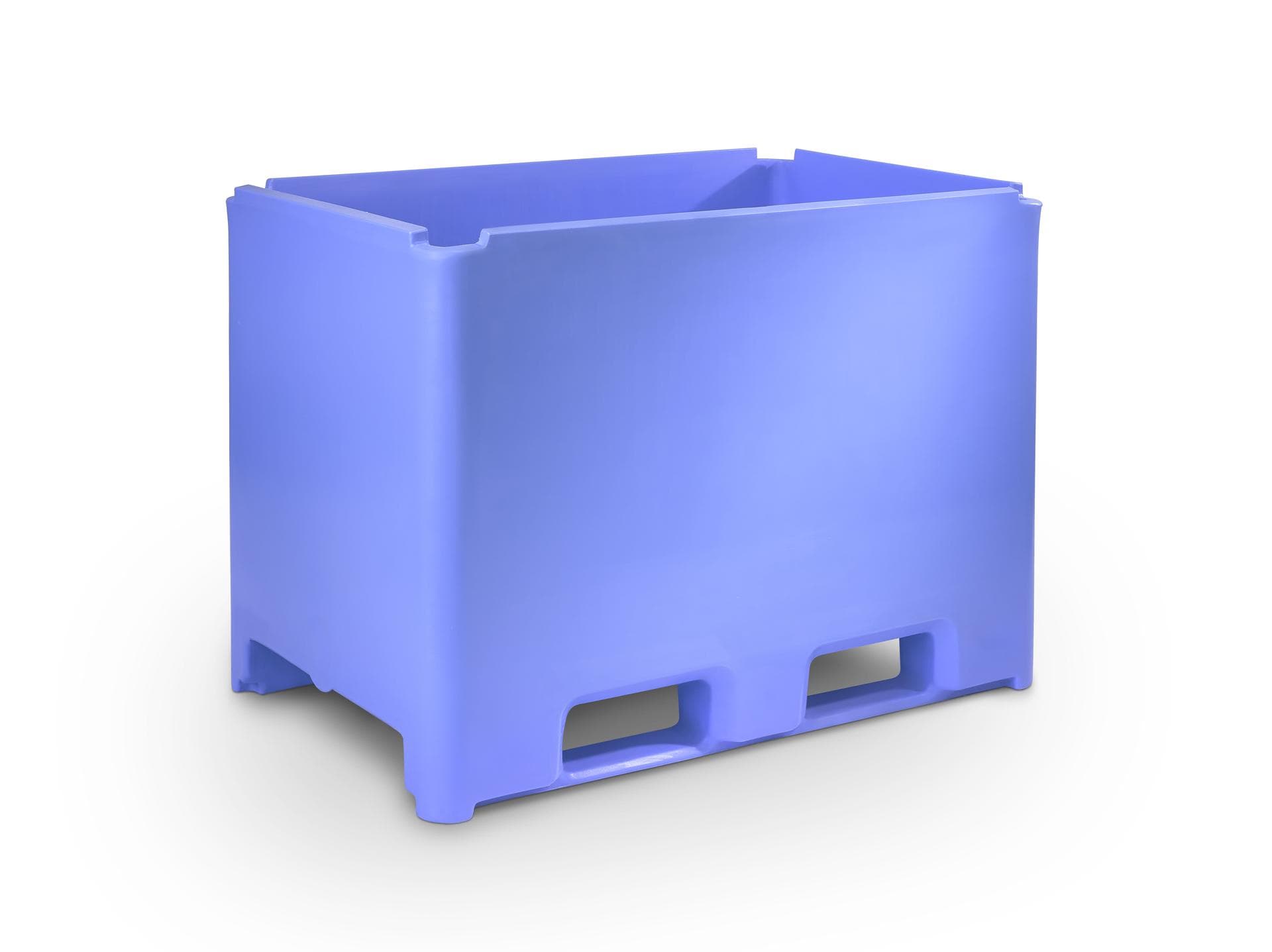
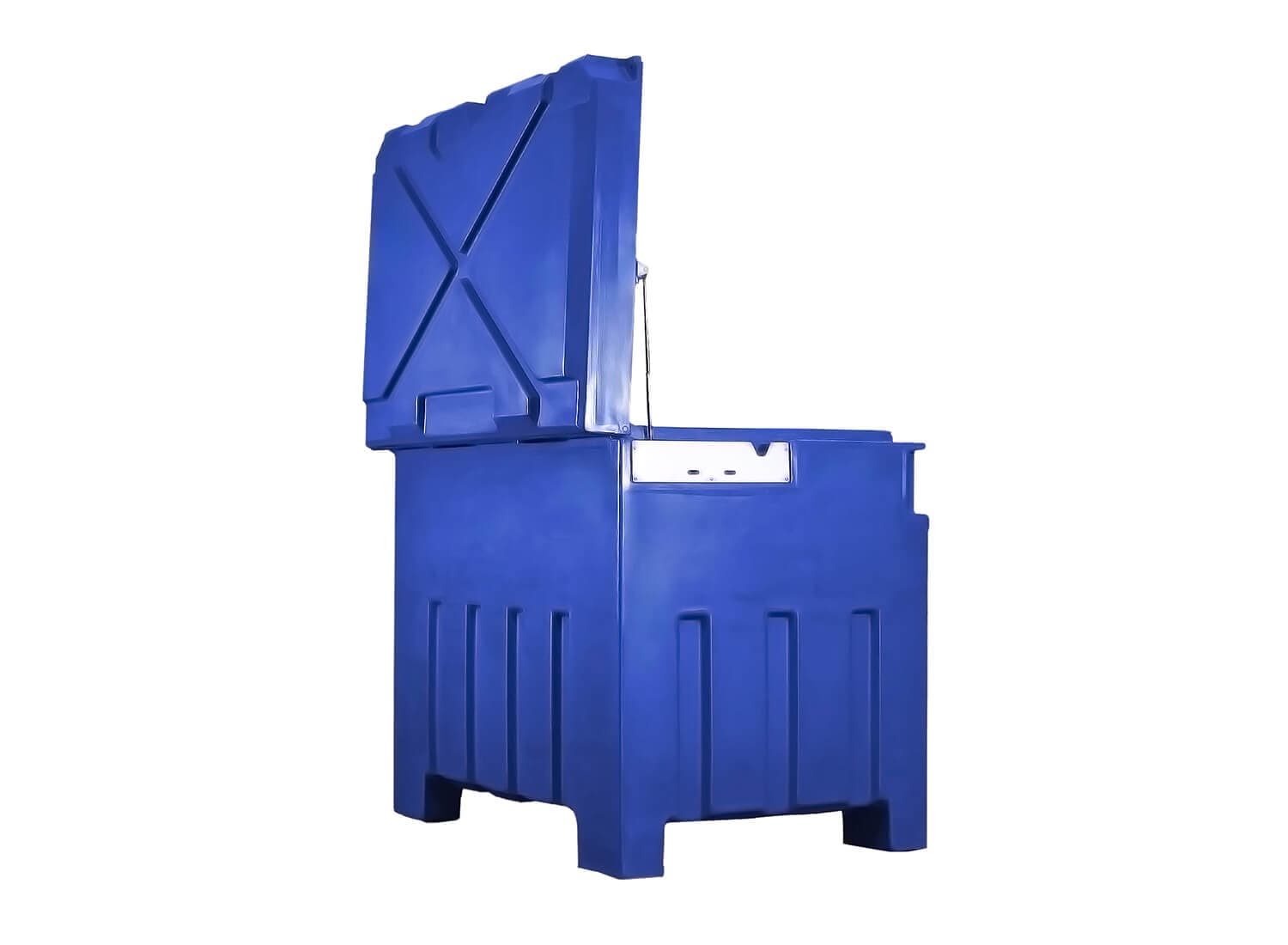
Deep-freeze warehouses are the ultimate stress test for load carriers. Between −25 °C and −40 °C, many plastics turn brittle, stack impacts from shuttles or forklifts leave microcracks, and every pallet flow in high-bay racking becomes a leakage risk. Rotogal containers with cold-tough HDPE compound are engineered for exactly this: stay tough, don't crack, don't embrittle.
operating temperature at full impact strength
thermal cycles without measurable degradation
special compound with low-damage rating
Down to −40 °C: pallet boxes and pallets that stay tough in frost instead of shattering.
In deep-freeze-intensive operations (fish, meat, ready meals, ice cream, pharma APIs) unit loads cycle daily between room temperature, chilled and deep-freeze storage. Thermal shock alone is harder on many materials than the deep freeze itself. Our compound and moulding are tuned to exactly this cycle — with tested impact strength at −40 °C per DIN EN 12574.
Your benefit
- Tough to −40 °C
Cold-tough HDPE handles stacker and shuttle impacts without fracturing.
- Form-stable
Contour tolerance ±1.5 mm even after thousands of thermal cycles.
- AS/RS and shuttle compatible
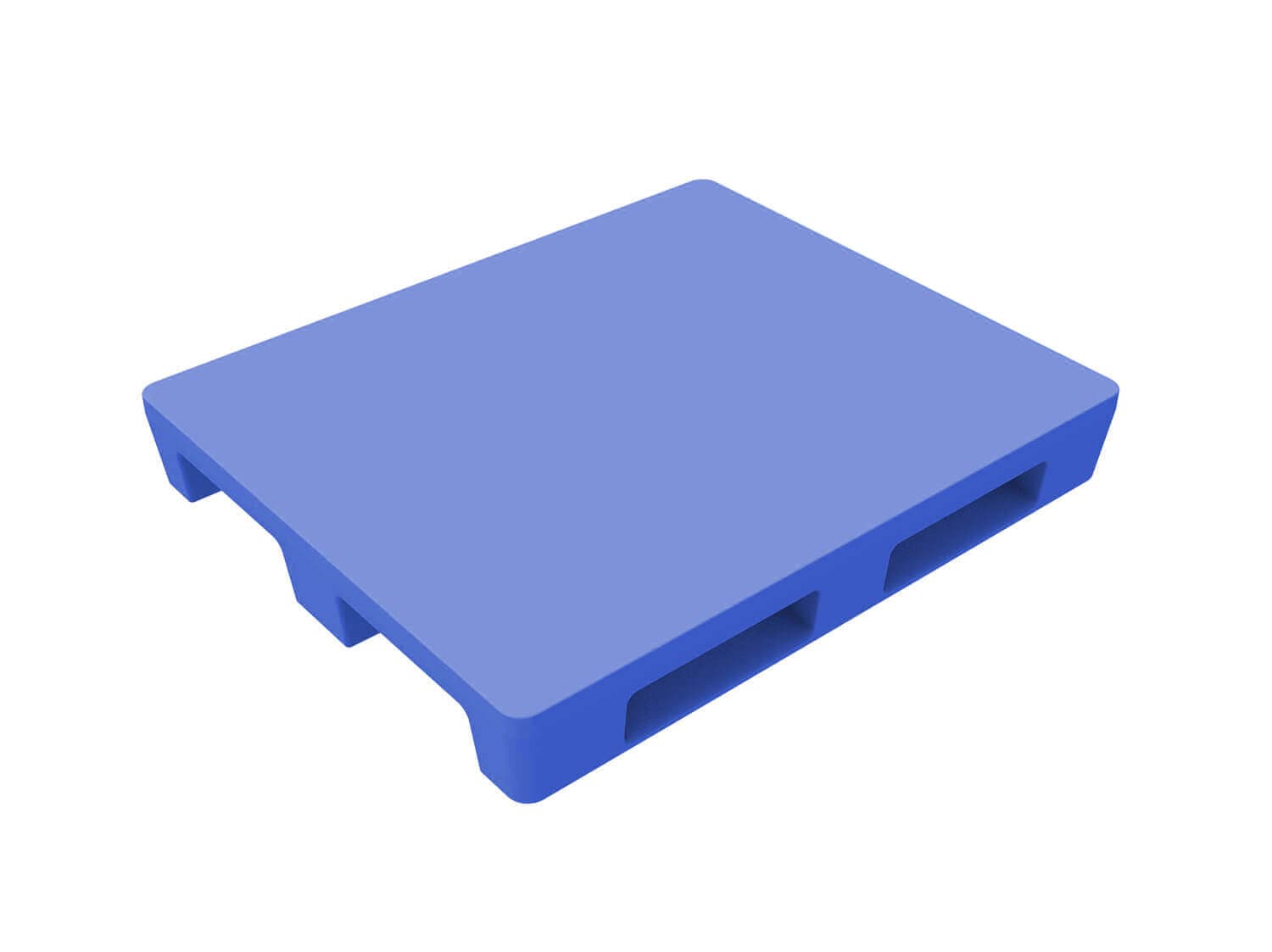
Integrated fork grooves, reinforced edges, precise floor patterns.
- Ice- and frost-resistant
Smooth outer surfaces let frost thaw quickly with no impact on contour.
Why standard plastic fails at −40 °C
Standard HDPE or PP compounds lose substantial impact strength from around −20 °C. A stacker-crane impact that only causes a dent at room temperature will shear off a corner below −25 °C. That's not a material defect but physics: amorphous regions in the polymer turn rigid.
Our compound development uses impact modifiers that keep the fracture energy high even at −40 °C. Per DIN EN 12574 our deep-freeze pallet boxes clear the required values with margin.
AS/RS and shuttle: high cycle rates, small tolerances
In automated mini-load warehouses and high-bay shuttle systems, pallet boxes get stored and retrieved in seconds. Every 2 mm deviation in container geometry is a potential cycle fault. Rotogal boxes keep their contour stable to ±1.5 mm even under thermal shock.
On top of that: integrated fork grooves, floor structures optimised for shuttle fingers, reinforced edge zones at load-critical points.
Common pitfalls & fixes
- Standard HDPE in deep-freeze
Explicitly order the cold-tough deep-freeze compound — standard food grade isn't enough.
- Too abrupt thermal change
Introduce a +2 °C buffer, no direct jumps from −30 °C to +20 °C.
- Ice accumulation in fork grooves
Specify closed grooved undersides or drip openings.
Frequently asked questions
Do your boxes survive continuous operation at −40 °C?
Yes. Our deep-freeze compound holds impact values steady at −40 °C over the long run. Field tests of more than 10 years with major cold-chain operators confirm it.
Is there a difference between deep-freeze and standard pallet boxes?
Yes. Compound, wall thickness and corner reinforcement differ. Deep-freeze variants are typically 8–12 % heavier than standard.
Can deep-freeze boxes also be used in warmer environments?
Yes. The deep-freeze compound works at room temperature and above — the only difference is the slightly higher weight.
More applications
Please note: All information on this page – in particular dimensions, technical data, material properties and application recommendations – is provided for general guidance only and is non-binding. The exact specifications tailored to your specific application are agreed on a binding basis as part of the quotation and order process.
Got a project?
Tell us about your requirement — we typically come back with a first assessment within 24 hours.