
Fish & seafood
Filleting, smokehouse, aquaculture — corrosion-free containers for the salty line.
Fish and seafood processing is the toughest test for container materials: permanently salty, permanently wet, often cycling between ice water and room temperature. Stainless steel rusts at weld seams, galvanised steel is out of the question. Rotationally moulded polyethylene is the corrosion-free, saltwater-resistant answer — seam-free, light, completely tight.
corrosion points even after 10 years of saltwater
deployable to deep-freeze
food contact certified
Filleting, smokehouse, aquaculture — corrosion-free containers for the salty line.
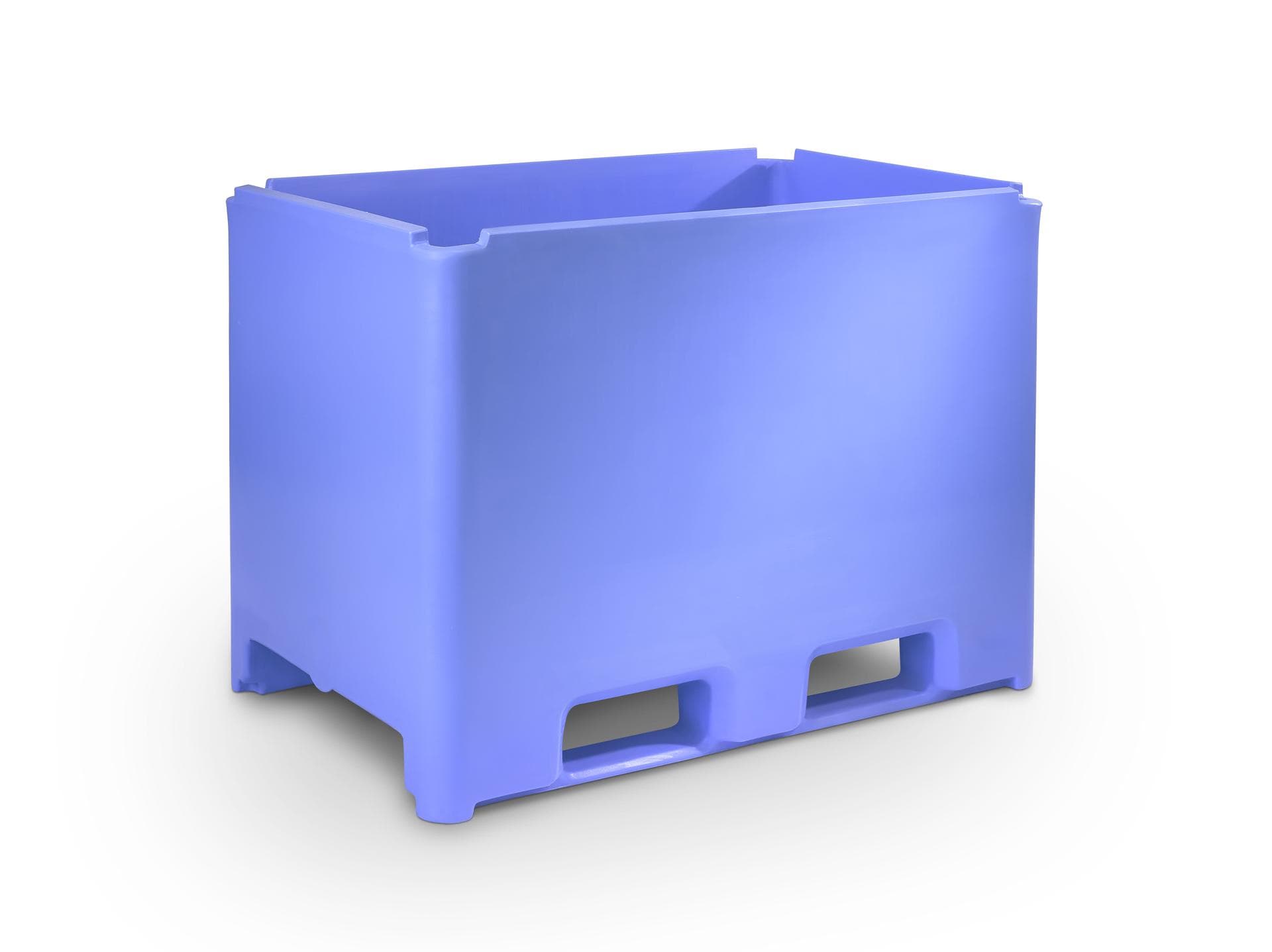
Typical stations: goods-in with ice, deboning, filleting, brine, smoking, marinade, deep freeze. Each station calls for dedicated containers — and they often get forklift-shuttled between stations. Rotogal containers ship with integrated fork entries and take rough handling without warping.
Your benefit
- Corrosion-free
No rust, even after years in saltwater and brine contact.
- Light & tight
30–40 % lighter than stainless, completely leak-tight without weld seams.
- Impact-safe to −40 °C
Tough in deep-freeze applications, no cracks from forklift contact.
- Taste-neutral
No aroma transfer between batches, no residual odours.
Brine, marinade, pickle: chemically stable containers
18 % salt brine, flavoured marinades at pH 3.5, acid baths for pickled herring: all of that corrodes stainless at weld seams and rules out galvanised steel. Our PE containers are chemically stable against every typical food concentration and develop neither taste nor odour transfer.
For marinade circulation we offer double-bottom variants with integrated drain — emptying without tilting, product flows out cleanly.
Ice and deep-freeze: cold material, no fracture
At −30 °C and below many plastics go brittle. Our HDPE with special compound stays tough down to −40 °C. Result: no crack from a short forklift knock, no hairline failure that becomes a leak later.
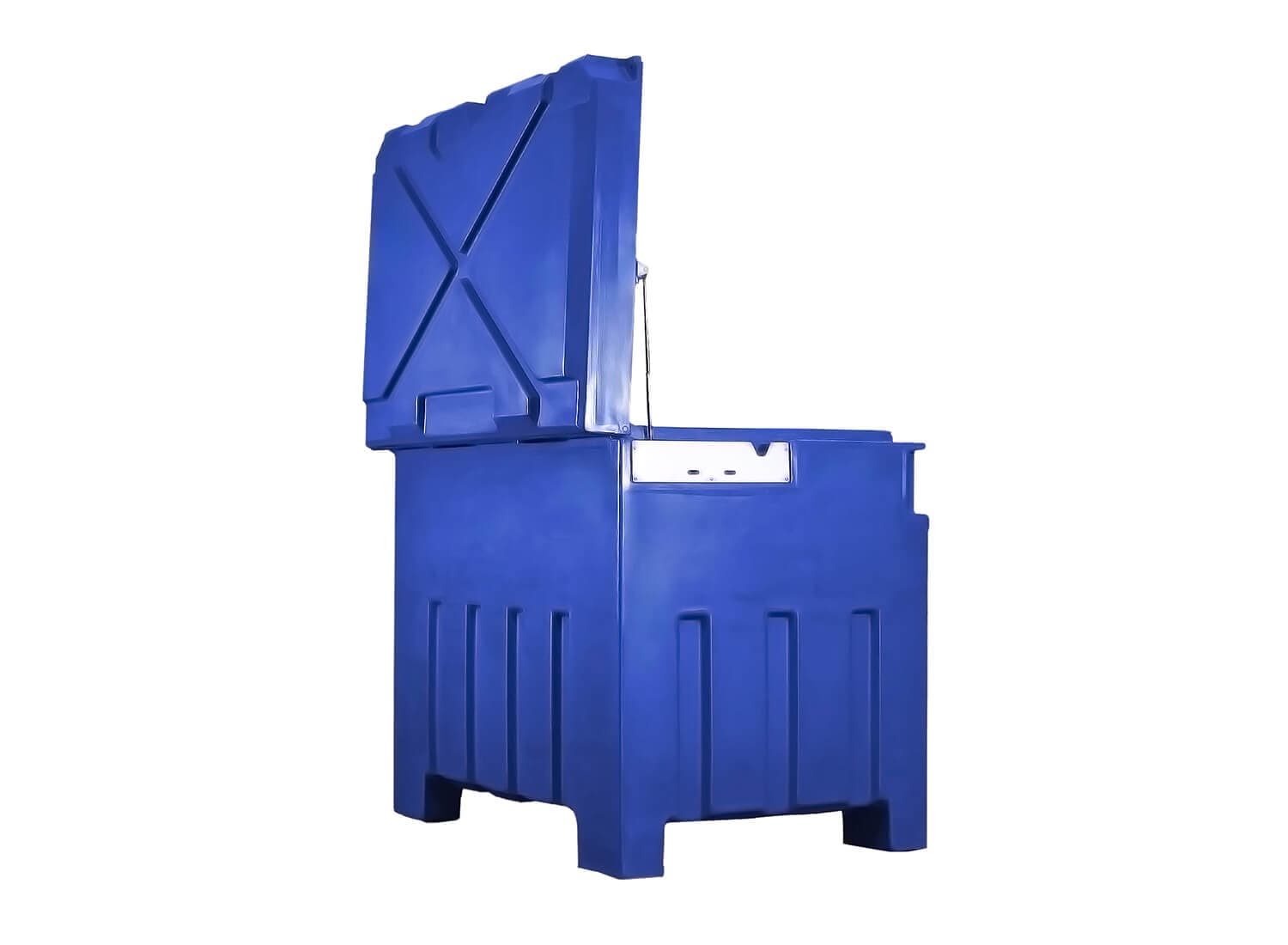
For direct dry-ice (CO2) use we additionally offer our dedicated dry-ice boxes — insulated and ventilated for that specific application.
Relevant industries
Frequently asked questions
Do your boxes withstand permanent brine contact?
Yes. HDPE shows no measurable ageing in 18–25 % brine — no weight gain, no embrittlement across the full service life.
Are there colour-coded variants for raw, smoked and marinated?
Stock colours white, blue, green and red. Custom colours possible — HACCP-compliant colour assignment in production recommended.
How long does a pallet box last in fish processing?
Under daily wet cleaning with warm alkaline solution, typically 10–15 years without noticeable loss of tightness or surface quality.
More applications
Please note: All information on this page – in particular dimensions, technical data, material properties and application recommendations – is provided for general guidance only and is non-binding. The exact specifications tailored to your specific application are agreed on a binding basis as part of the quotation and order process.
Got a project?
Tell us about your requirement — we typically come back with a first assessment within 24 hours.