
Cleanroom manufacturing GMP C/D
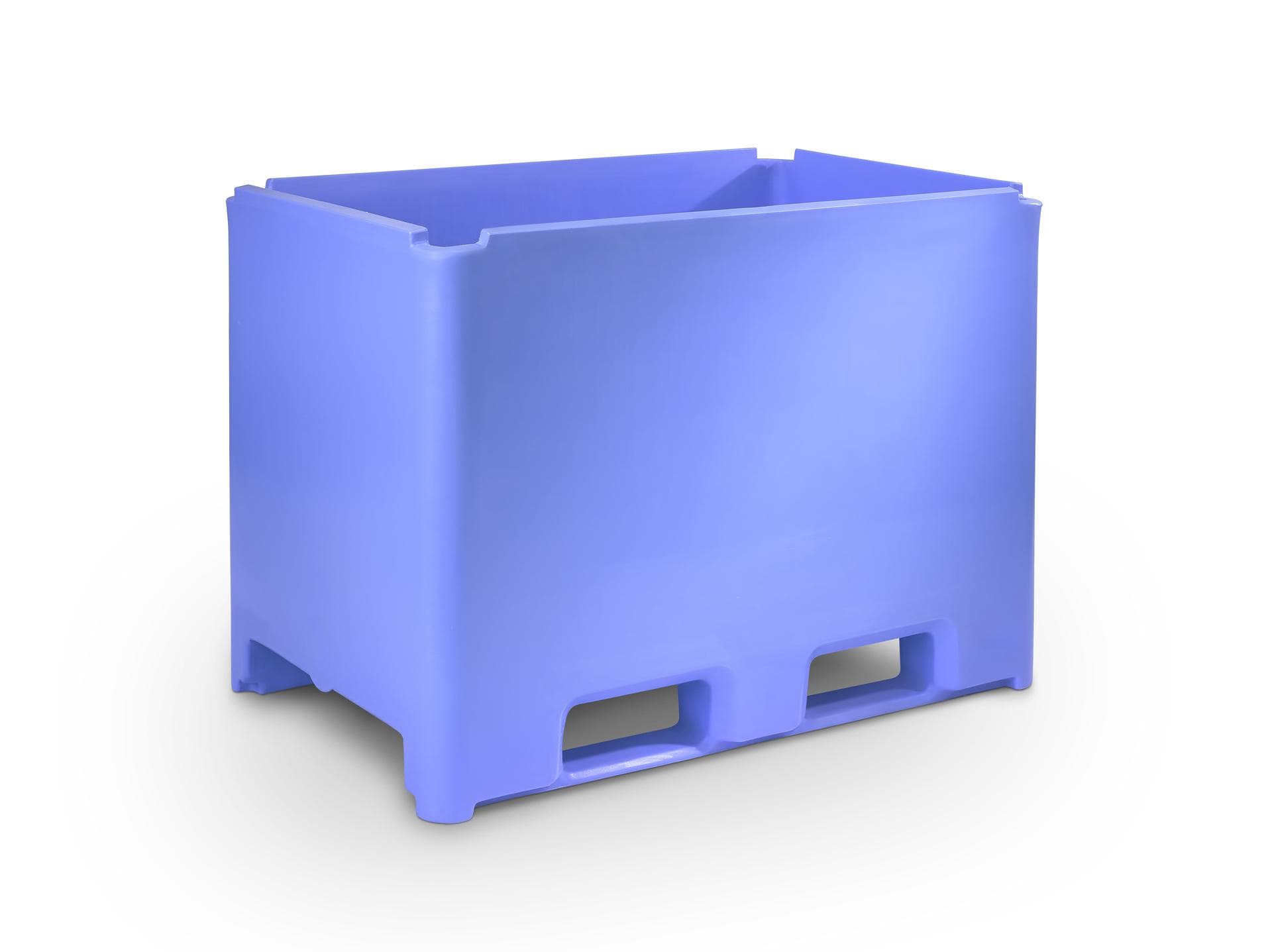
Low-particle containers for GMP cleanrooms class C and D.
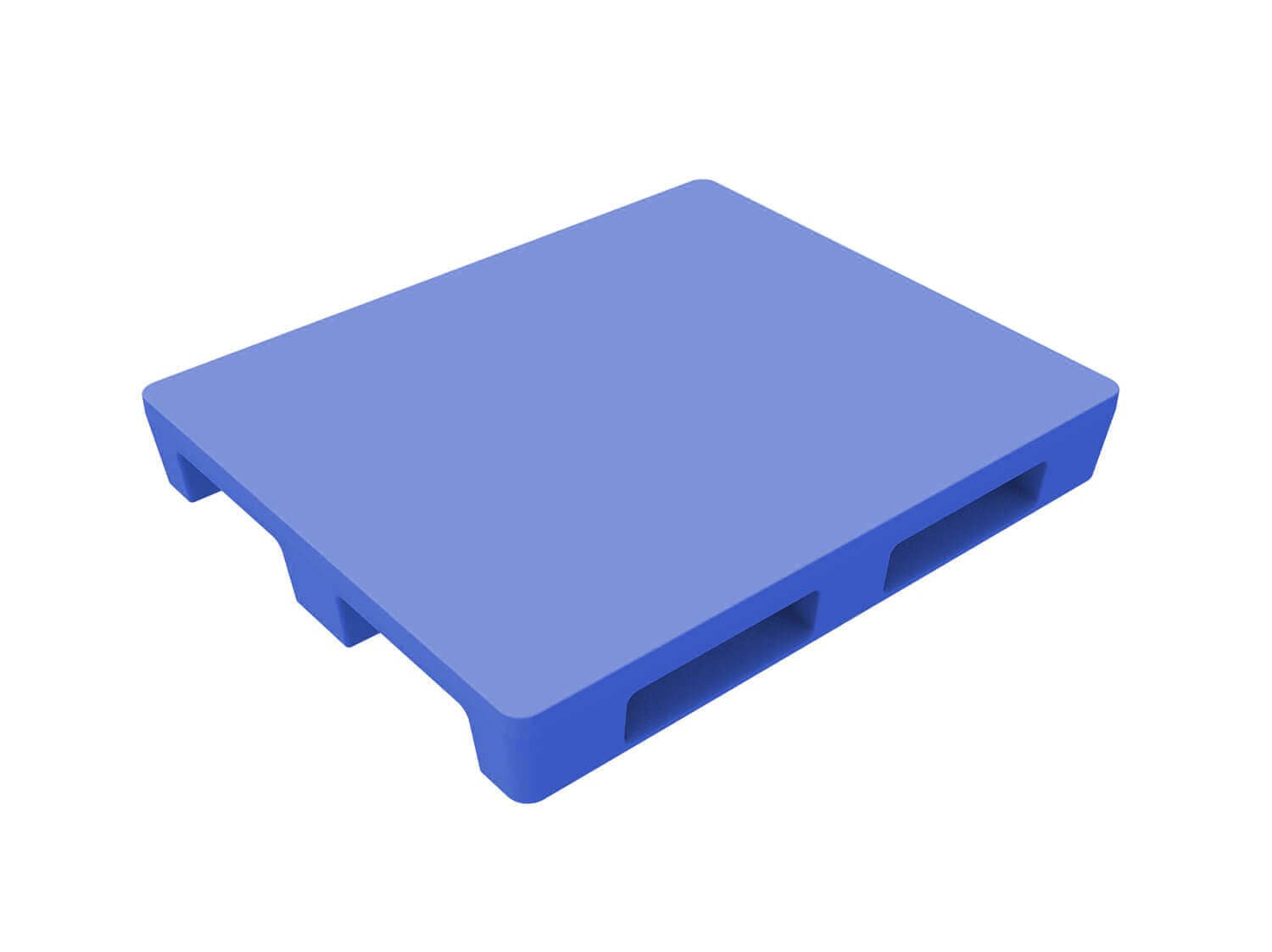
GMP cleanrooms of class C and D impose precisely quantified requirements on any equipment brought in: particle emission at rest (ISO 14644-1), wipe-resistance against isopropanol and hydrogen peroxide, compatibility with the sterilisation methods of adjacent A/B zones, and full traceability to raw-material batch. Rotogal supplies rotationally moulded pallets and transport containers with cleanroom suitability evidence — including cleaning and airlock protocol.
qualified for cleanroom class C at-rest
wipe-resistant without surface abrasion
/ cm² · min at-rest
traceable to raw-material batch
Low-particle containers for GMP cleanrooms class C and D.
- Particle emission at rest
Every item brought in is a potential particle source. Polished HDPE surfaces and abrasion-resistant compounds measurably minimise that contribution.
- IPA/H₂O₂ wipe resistance
Routine wipes 3–5× per day attack soft surfaces. Our compound shows unchanged Ra after 5,000 cycles.
- Contamination Control Strategy per Annex 1
Every container must be part of the CCS documentation. We supply risk assessment, cleaning protocol and maintenance recommendation.
- Airlock compatibility
Dimensions must fit pass-through airlocks and not obstruct LF zones. We supply containers in validated airlock dimensions.
How Rotogal solves them
- Cleanroom suitability evidence
LPC certificate, particle emission protocol and wipe resistance report — on request, per batch.
- Optional Ra ≤ 0.4 µm
Polished inner surfaces for sensitive applications — documented with roughness measurement protocol.
- Moulded-in serial ID
Scannable marking for your GMP asset master data — no stickers that could peel off.
- Standard airlock SOP
Template for your cleanroom rules including cleaning protocol and colour coding — adaptable to your facility.
Standards & regulation
Sterile manufacturing — CCS-aligned documentation for transport containers.
Cleanroom classification and test methods — particle emission measurement documented.
Microbiological Control and Monitoring of Aseptic Processing Environments — material suitability confirmed.
Quality Risk Management — container risk assessment available as CCS annex.
EU GMP Annex 1 (2022): The tightened cleanroom world
The revised Annex 1 to the EU GMP guide, in force since 2022, shifts sterile manufacturing to a Contamination Control Strategy (CCS) — a holistic risk assessment that treats materials, equipment, personnel and processes as equals. For transport containers and pallets that means: documented suitability, a defined cleaning and airlock protocol, complete traceability.
Rotogal containers are made from cleanroom-qualified HDPE, with moulded-in serial ID and a declaration of conformity included. For A/B airlocking we have developed a standard protocol: pre-cleaning with IPA 70 %, intermediate rinse with WFI-grade DI water, final drying under laminar flow — yielding particle levels that remain unremarkable even in an adjacent class A during operation.
For plants creating their CCS document for the first time or adapting to Annex 1, we supply a container risk assessment with evaluation of sources, cleaning efficacy and maintenance intervals — as an annex to your QA documentation.
Particle emission: What ISO 14644 demands from a container
Class C corresponds to ISO 7 in operation and ISO 8 at rest — a maximum of 352,000 particles ≥ 0.5 µm per m³. A container brought into the room must not raise this concentration to a critical level. With plastics, particle emission results mainly from surface abrasion and electrostatic attraction of ambient particles.
Rotogal HDPE has a measured emission value in airflow of under 1 particle per cm² surface per minute (ISO 14644-3 at-rest) — that is an order of magnitude below room limits even in class C in operation. Critical factors: surface quality (Ra ≤ 0.8 µm, polished inner face), wall abrasion resistance and the material compound, which releases no unbound additives.
For plants with high sensitivity (e.g. parenterals production) we offer an LPC test (Liquid Particle Count) as additional individual check — containers are rinsed with WFI, the rinse water analysed for particle count and an LPC certificate supplied.
Wipes: IPA, H₂O₂, peracetic acid — what the surface endures
In GMP C/D, surfaces are routinely wiped with isopropanol 70 %, hydrogen peroxide 5–6 % or peracetic acid formulations, occasionally NaOCl solutions. Conventional plastics show visible wear after 500–1,000 cycles, cracking at joints or discolouration — turning the cleaning agent into a particle source.
Our HDPE compound is chemically stable against these media: no effect on surface roughness, no discolouration, no cracking. Ageing tests over 5,000 cleaning cycles (typical 4-year cleanroom use) yield surface metrics within the as-new specification.
For the standard airlock routine (three IPA wipes in the pass-through system) we supply an SOP template that you can adapt to your local cleanroom rules — incl. a proposed colour-coding scheme for cleaned / prepared / inducted status.
Checklist: Container qualification for cleanroom C/D
- Particle emission value (ISO 14644-3) documented
- Wipe agent compatibility (IPA, H₂O₂, PAA) in the data sheet
- Airlock dimensions aligned with pass-through system
- Airlock SOP adapted from template
- Serial-ID system integrated into GMP asset master data
- Container risk assessment prepared for CCS
- Optional: LPC certificate per batch in the audit file
Related applications
Frequently asked questions
Are the containers also released for GMP A/B zones?
Standard versions are released for GMP C/D. For A/B use (sterile manufacturing) we develop individual custom solutions with additional LPC testing and documented airlock validation — please contact us with the specific requirement.
Do the containers withstand VHP sterilisation?
Yes. Our HDPE compound is resistant to vaporised hydrogen peroxide up to 1,000 ppm — documented in ageing tests over 200 cycles without measurable material change. For isolator cycles with higher VHP concentrations we match the material selection individually on request.
Can the containers be steam-sterilised?
Standard HDPE withstands 121 °C steam sterilisation for short cycles but deforms under sustained load. For steam-sterilisable versions we offer a reinforced PP compound that handles autoclave cycles up to 134 °C without deformation — on request.
What is the particle emission of a freshly cleaned container?
Measured in an ISO-5 reference room under laminar flow: < 1 particle ≥ 0.5 µm per cm² per minute at-rest. In operation (movement, opening, closing) the value increases but stays below the limits for ISO 7 rooms.
Is the container supplied with an airlock protocol?
Yes — as an SOP template adaptable to your cleanroom rules. Standard flow: IPA 70 % wipe outside, drying under LF, second IPA wipe in the airlock, entry after status release. We recommend colour coding and status indication; sticker proposals are included.
More industries
Please note: All information on this page – in particular dimensions, technical data, material properties and application recommendations – is provided for general guidance only and is non-binding. The exact specifications tailored to your specific application are agreed on a binding basis as part of the quotation and order process.
Got a project?
Tell us about your requirement — we typically come back with a first assessment within 24 hours.