
API & active-substance handling
Containment-grade containers for HPAPI and OEB class 3–5.
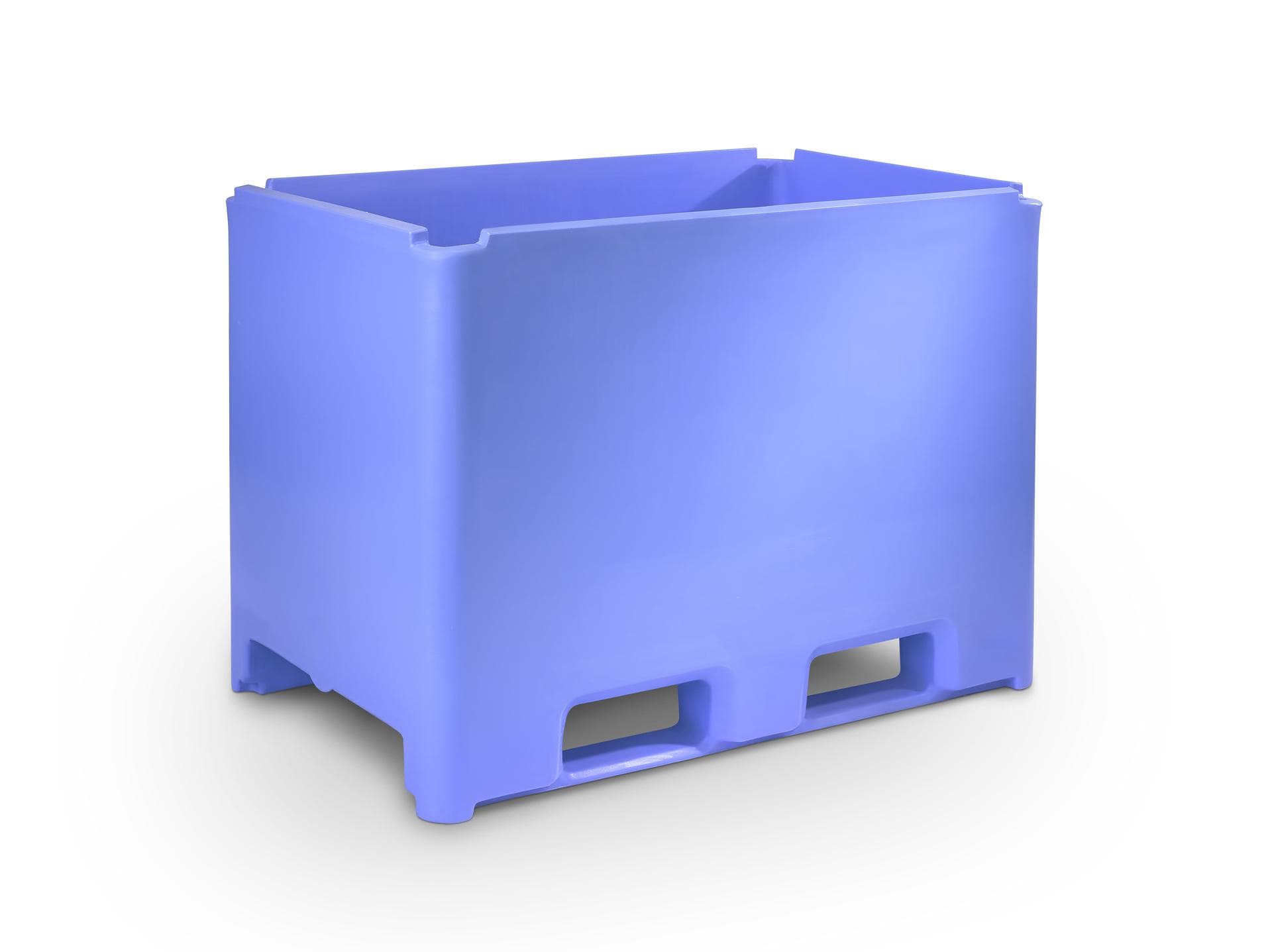
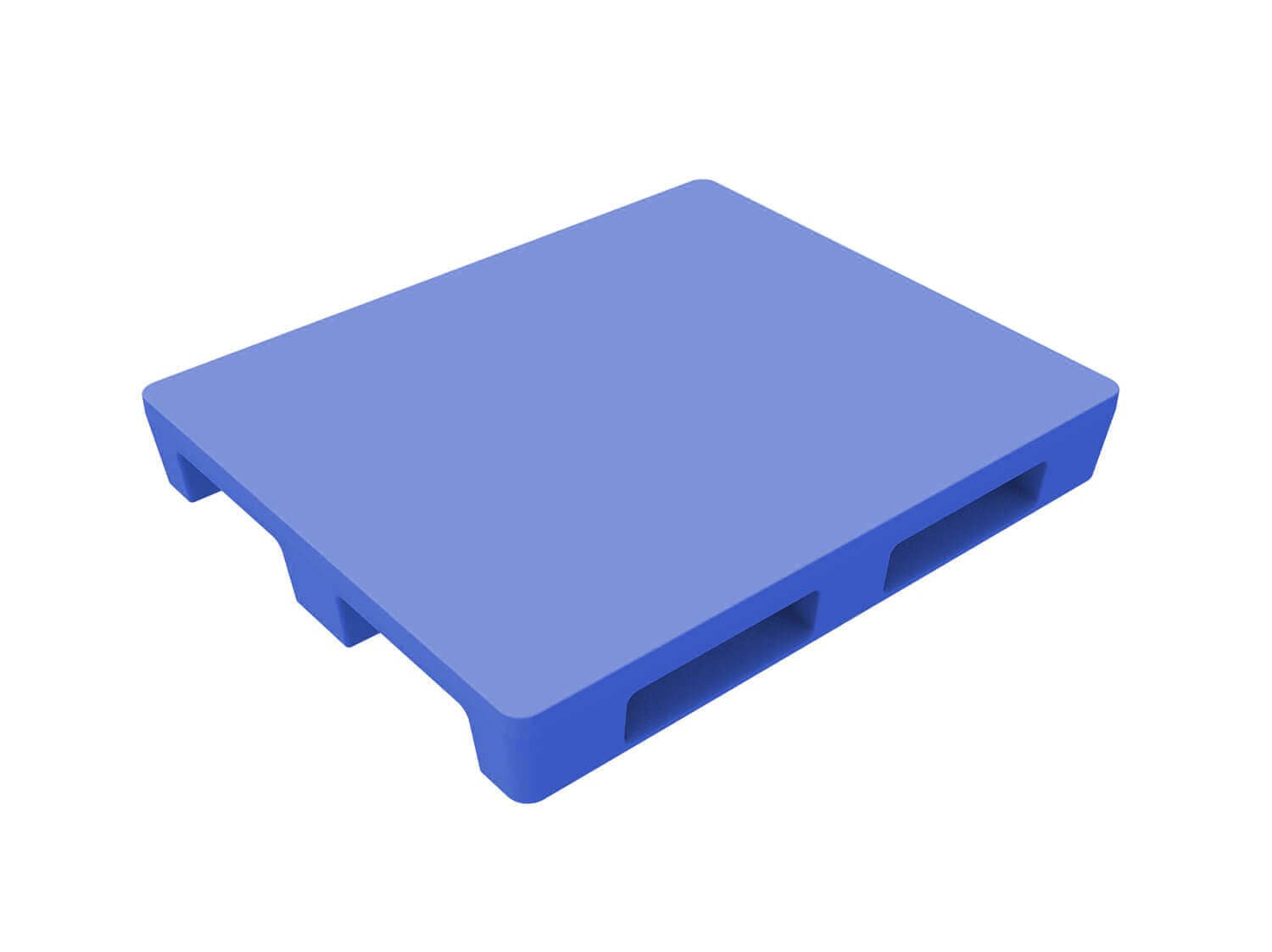
In active-substance manufacturing, particle management and containment determine operator safety, batch purity and GMP audit readiness. Rotogal supplies rotationally moulded pallets and transport containers engineered for HPAPI handling — with electrostatically dissipative PE compounds, ATEX-zone compatibility and validated cleaning protocols up to OEB class 5.
containment class with special version
dust-explosion-protected version available
surface resistance ESD compound
documented compliance
Containment-grade containers for HPAPI and OEB class 3–5.
- Containment up to OEB 5
Operator exposure below 1 µg/m³ requires seamless handover geometries — split-butterfly-valve receptacles moulded into the container.
- ATEX zone 21/22
Combustible dusts demand electrostatically dissipative containers (< 10⁶ Ω). We supply certified versions with ESD compounds.
- Cross-contamination below PDE
Residues must stay below the product-specific limit. Seam-free surfaces with Ra ≤ 0.8 µm make that reproducible.
- GMP-compliant traceability
Every container an embossed ID, every batch a DoC, every cleaning a record — audit standard without rework.
How Rotogal solves them
- ESD compound available
Supplied in dissipative PE with surface resistance < 10⁶ Ω — ATEX-certified for zone 21 and 22.
- Split-butterfly-valve receptacles
Containers with moulded-in flanges for SBV systems from GEA, Wilden, ChargePoint — sealed handover without manual exposure.
- Documented cleaning profile
IQ/OQ package with residue evidence following a defined cleaning routine — basis for your PDE validation.
- Ra ≤ 0.4 µm on request
For highly sensitive substances we offer polish-moulded inner surfaces with Ra ≤ 0.4 µm — plus roughness measurement protocol.
Standards & regulation
Good Manufacturing Practice for active substances — containment, cleaning, traceability documented.
Internationally harmonised GMP guideline for APIs — container requirements referenced.
Explosion protection — ESD version certified for zone 21 and 22.
Oral Solid Dosage Facilities — recommended surface roughness and geometry met.
OEB classification: What really matters for HPAPI
The Occupational Exposure Band (OEB) groups active substances by pharmacological potency and toxicity into five classes — from OEB 1 (> 1,000 µg/m³ OEL) to OEB 5 (< 1 µg/m³ OEL). From class 3 onward, we talk about High Potency APIs (HPAPI), where even traces in the air can reach effective doses.
Standard containers are not enough for transport and storage of these substances. What's required: geometries without cavities, smooth inner surfaces without injection-moulding weld lines, validated cleaning protocols with documented residue limits, and from OEB 4/5 containment functions such as split-butterfly valves or liner systems.
Rotogal containers are rated for OEB 3 as standard. For OEB 4 and 5 we supply special versions with embedded flanges for SBV connections, smooth-walled inner profiles without edges and a declaration of conformity for documented cleaning residues below the batch-specific OEL.
ATEX zones and electrostatic discharge
In active-substance solids handling, ATEX zones 21 or 22 are common — areas where combustible dusts can occasionally or rarely be present at ignitable concentrations. Standard HDPE has a surface resistance in the 10¹³ Ω range and can accumulate static charges up to 30 kV — an ignition risk in any ATEX zone.
Our ESD compounds reach surface resistances < 10⁶ Ω, dissipate charges in milliseconds and are certified for zone 21/22. For marginally conductive products (excluding explosives, for pharmaceutical fine powders) we additionally offer Ex versions with integrated grounding lug and documented discharge figure.
For your risk assessment you receive an ATEX conformity package: material certificate, surface resistance measurement protocol, grounding-concept proposal, labelling example for the equipment. That reduces your safety coordinator's documentation work to the zone assignment itself.
Cross-contamination: The cleanable-by-design approach
EMA and FDA inspectors increasingly focus on cross-contamination in active-substance production. Thresholds are not flatly defined but derived from the Permitted Daily Exposure (PDE) of the substances involved — typically in the micrograms-per-day-dose range. Every transport-container rotation between two products must demonstrably stay below that value.
Rotogal containers are made via rotational moulding — a method without weld lines, without gate marks, without cavities. Residue validations at customer sites show: after a standard cleaning protocol (three-step IPA wipe, CIP with cleaner + rinse), residues typically sit 2–3 orders of magnitude below the PDE-based limit.
For validation we supply containers with defined surface roughness (Ra ≤ 0.8 µm, on request Ra ≤ 0.4 µm), embossed serial ID for individual tracking and a cleaning protocol template. That substantially reduces the validation effort of your QA team.
Checklist: API container qualification
- OEB class of the substance determined and containment requirement derived
- ATEX zone of the point of use (21/22) checked, ESD compound specified
- SBV interface aligned with plant engineering
- Cleaning protocol with PDE-based residue limit drafted
- Surface roughness (Ra ≤ 0.8 µm or ≤ 0.4 µm) documented in data sheet
- Serial ID captured in GMP asset master data
- DoC, IQ/OQ package and ATEX certificate in the audit file

Related applications
Frequently asked questions
Up to which OEB class are your standard containers usable?
Standard HDPE containers with Ra ≤ 0.8 µm can be validated up to OEB 3. OEB 4 and 5 require special versions with SBV interface, Ra ≤ 0.4 µm and an accompanying IQ/OQ package — supplied on request.
Are the ESD versions approved for ATEX zone 20?
Our standard ESD versions are certified for zone 21 and 22. For zone 20 (permanent dust atmosphere) we offer custom solutions with an integrated grounding concept and detailed ignition-protection evidence — please contact us with the specific application.
How does the SBV interface work on a rotationally moulded container?
We mould a flange made of dissipative PE into the container wall. The passive half of the split-butterfly valve is factory-bolted onto that flange (GEA, Wilden, ChargePoint — we work with all common systems). The active part stays fixed on the process equipment.
Do you get a declaration of conformity for every batch?
Yes. Every shipment includes a DoC with FDA and EU references, material batch, ATEX certificate (if ESD) and — on request — the cleaning protocol template for your QA team.
Can the containers be reused across multiple products?
With a validated cleaning protocol: yes. The PDE-based limit must be met and documented for each product combination. We provide a cleaning validation template and support swab and rinse sampling on site on request.
More industries
Please note: All information on this page – in particular dimensions, technical data, material properties and application recommendations – is provided for general guidance only and is non-binding. The exact specifications tailored to your specific application are agreed on a binding basis as part of the quotation and order process.
Got a project?
Tell us about your requirement — we typically come back with a first assessment within 24 hours.