
Dairy & cheese industry
Seam-free through brine bath, maturation cell and CIP loop.
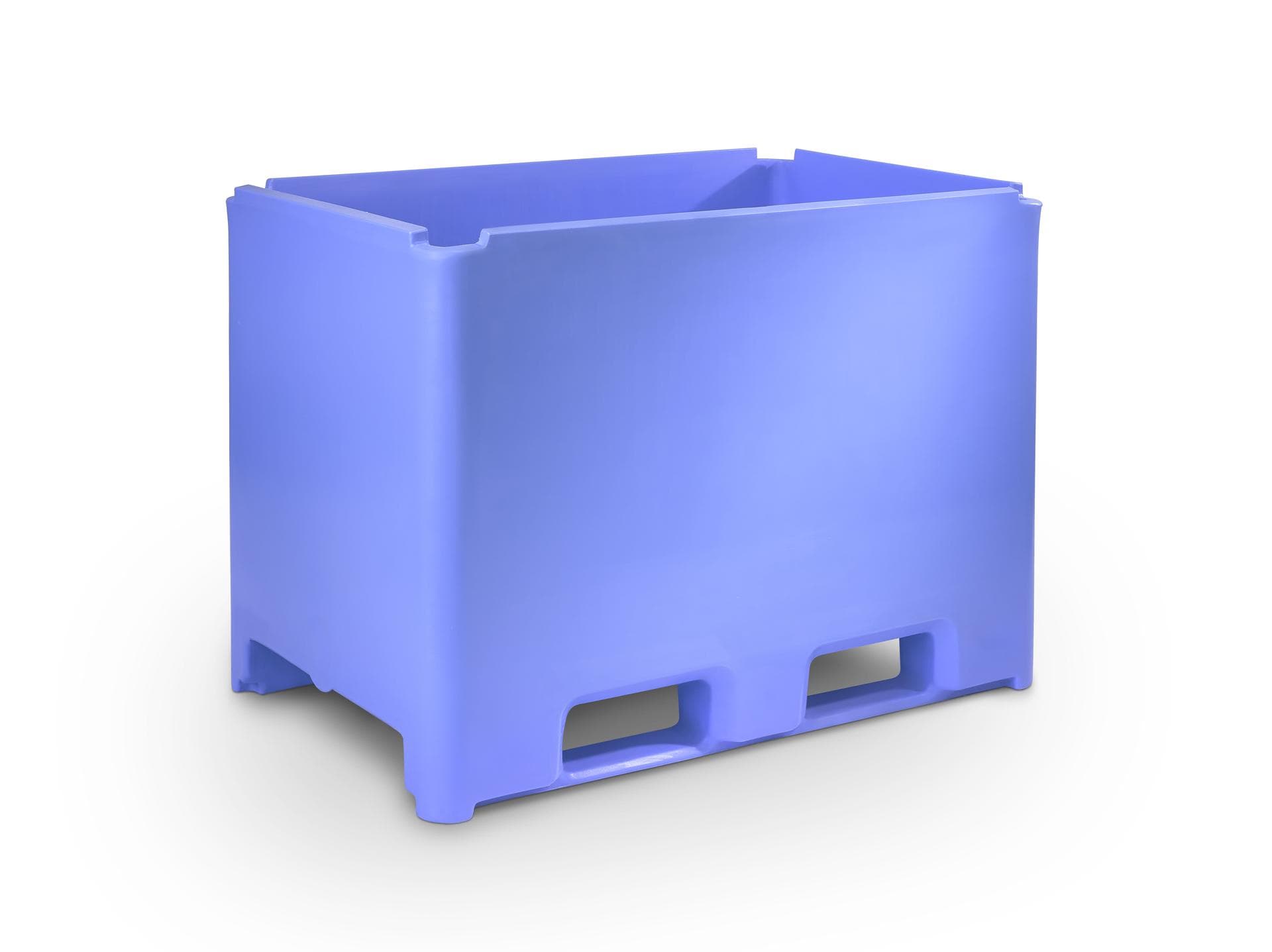
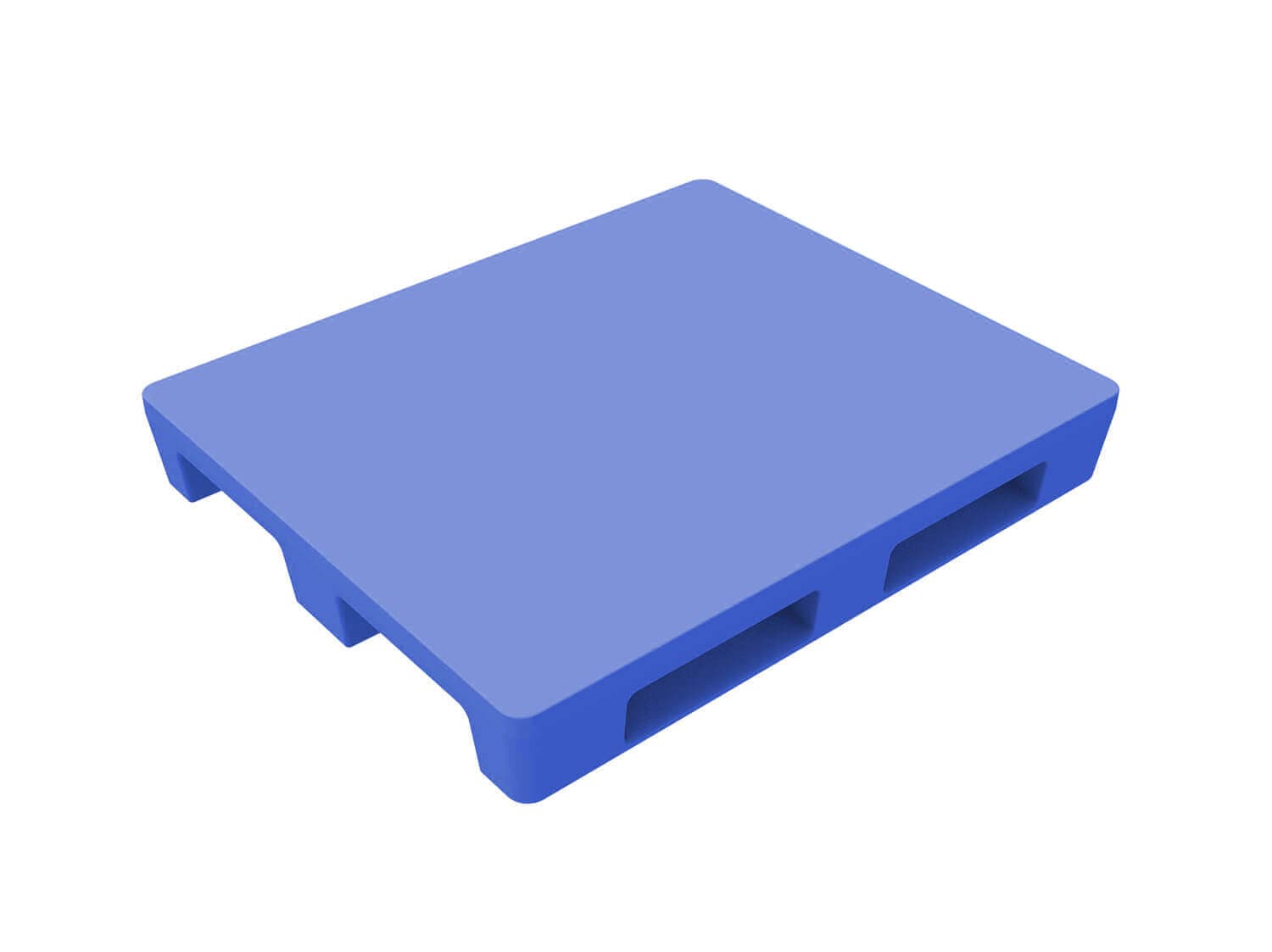
Dairies and cheese plants place an unusual combination of demands on containers: brine baths of 20 % NaCl, low-pH whey, CIP cleaning with caustic at 80 °C, and often months of maturation in humid cells at 4–14 °C. Rotogal supplies rotationally moulded pallets and containers that survive this cycle without swelling, cracking or flavour transfer — while keeping the surface quality that cheese-bottom contact requires.
brine-bath resistance without swelling
CIP caustic under continuous load
working window whey & cleaners
odour-neutral even after maturation
Seam-free through brine bath, maturation cell and CIP loop.
- Chloride stress cracks on stainless welds
20 % brine baths are the death of any non-2507-duplex weld. HDPE structurally does not know this failure mode.
- Thermal shock loading
CIP cycles switch between 80 °C and 15 °C rinse water within minutes. Our containers are rated for 2,000+ cycles — without cracking.
- Flavour transfer between batches
Porous materials absorb aromatics. PE absorbs < 0.01 % water and no fat aromatics — maturation batch A stays batch A.
- Colour coding for variety separation
Simultaneously maturing varieties in one cell demand colour-coded containers. Through-coloured, not painted — so scratches cannot cause mix-ups.
How Rotogal solves them
- Brine-qualified
Documented tested in 20 % NaCl solution over 5 years continuous exposure — no swelling, no flavour transfer.
- CIP-certified geometries
3° drainage slope, integrated spray-shadow-free design, compatible with caustic up to 85 °C and acid up to 60 °C.
- Through-coloured batches
Standard colour palette for variety separation: white, blue, red, green, yellow — pigment in the raw material, not on the surface.
- Bespoke cheese-mould trays
Rotational moulding allows customer-specific tray geometries with integrated drainage passages and CIP lance receptacles.
Standards & regulation
Framework regulation food contact — DoC per batch including FDA reference.
Specific migration limits for plastics — SML evidence in the data sheet.
Hygienic Design — CIP compatibility, drainage slopes, radii confirmed.
Audit-ready documentation on cleaning validation and chemical resistance.
Brine technology: Why only through-coloured HDPE lasts
A classic cheese brine sits at 18–22 % NaCl, 10–14 °C and slightly above-neutral pH. Over months, chloride ions, dissolved calcium and proteins act on every component here. Stainless steel reacts with chloride stress-corrosion cracking at welds, concrete develops calcium efflorescence, painted steel loses its coating.
HDPE in rotational moulding is structurally immune to this regime: no released ions, no permeation, no corrosion. What matters is through-colouring — surface pigmentation would wear off in brine after months and contaminate the bulk filling. Our containers are coloured in the raw material, so even 1 mm of brush wear still shows the same colour.
For brine grids and cheese-mould trays we supply geometries with flow-through holes matched to the circulation pattern. Result: even salting without dead zones — a technical edge that shows directly in the quality consistency of the maturation process.
CIP at 80 °C: Caustic, acid and peracetic acid in rotation
Cleaning-in-Place in dairy operations is the toughest cleaning regime in food: caustic (NaOH 1.5–2.5 %) at 75–85 °C, then acid (HNO₃ 1.0–1.5 %) at 60 °C, with rinses in between and a final peracetic acid disinfection. At 4–6 CIP cycles per day, that is over 1,500 thermo-chemical load changes per year.
Our containers are built for this continuous service. Stress analysis, accelerated ageing tests and on-site measurements at customer sites show: after 5 years of CIP, the tensile strength of our HDPE is still > 95 % of new. Standard injection-moulded PE loses 20–30 % over the same period.
For validating your cleaning process we supply containers with a TC sensor pocket on request — you measure the inside temperature directly during the CIP cycle and document the thermal exposure time for your HACCP file.
Maturation cells & flavour transfer: What PE does not absorb
In cheese maturation the raw material lies in direct contact with transport and storage containers for weeks. Porous materials — classically wood, sometimes concrete surfaces — absorb volatile aromatics and fatty acids and release them back into the next batch. For specialty cheeses with ambient maturation, that is a controlled process variable; in modern semi-hard cheese lines it is a quality risk.
HDPE has a water absorption of < 0.01 % and does not absorb fat aromatics. Our containers have been in cheese maturation cells for 40 years — with no documented aroma-transfer cases. That holds even after aggressive CIP: the surface stays closed and permanently absorbs neither caustic residue nor cheese aromatics.
For plants with specialty maturation (smear-ripened, blue-veined) we offer special colours for batch separation and colour-coded shelf systems — so that even simultaneous maturation of several varieties in one cell produces no cross-contamination.
Checklist: Container qualification for dairy/cheese
- Brine resistance certificate (20 % NaCl, ≥ 24 months) on file
- CIP compatibility with plant cleaners documented
- Thermal capability 80 °C ↔ 15 °C verified
- Water absorption < 0.01 % confirmed
- Through-colouring rather than surface pigmentation
- DoC per EU 1935/2004 incl. SML evidence per batch
- TC sensor position for CIP validation optionally integrated

Frequently asked questions
How does HDPE behave in a 20 % brine bath after 5 years?
Tensile strength > 95 % of new, no measurable swelling, no surface change. Our long-term data is based on customer applications since 1998 — periodic samples confirm: no ageing signs.
Can the containers be connected to automatic CIP systems?
Yes — as a special version we supply containers with embedded CIP connection flanges per DIN 11864 or Tri-Clamp. Spray heads and drainage geometries are specified jointly with your CIP engineer.
Which colours are available as standard for variety separation?
White, deep blue, signal red, grass green, yellow — all food-grade per EU 10/2011, through-coloured. Special colours (Pantone match) from 50 containers.
Don't the containers become brittle in maturation cells due to humidity?
HDPE has water absorption below 0.01 % — so no hydrolytic ageing occurs. In 50+-year customer applications at > 90 % relative humidity and temperatures around 4 °C, no embrittlement has been documented.
Can the containers also be used for whey removal?
Yes. Whey (pH 4–5) does not attack our HDPE, and the containers can be fully cleaned after emptying via a standard CIP cycle. For dedicated whey logistics we offer 600 and 1,000-litre variants with outlet closures.
More industries
Please note: All information on this page – in particular dimensions, technical data, material properties and application recommendations – is provided for general guidance only and is non-binding. The exact specifications tailored to your specific application are agreed on a binding basis as part of the quotation and order process.
Got a project?
Tell us about your requirement — we typically come back with a first assessment within 24 hours.