
Dairy & cheese
Maturation, salt bath, transport — rugged PE solutions for dairy operations.
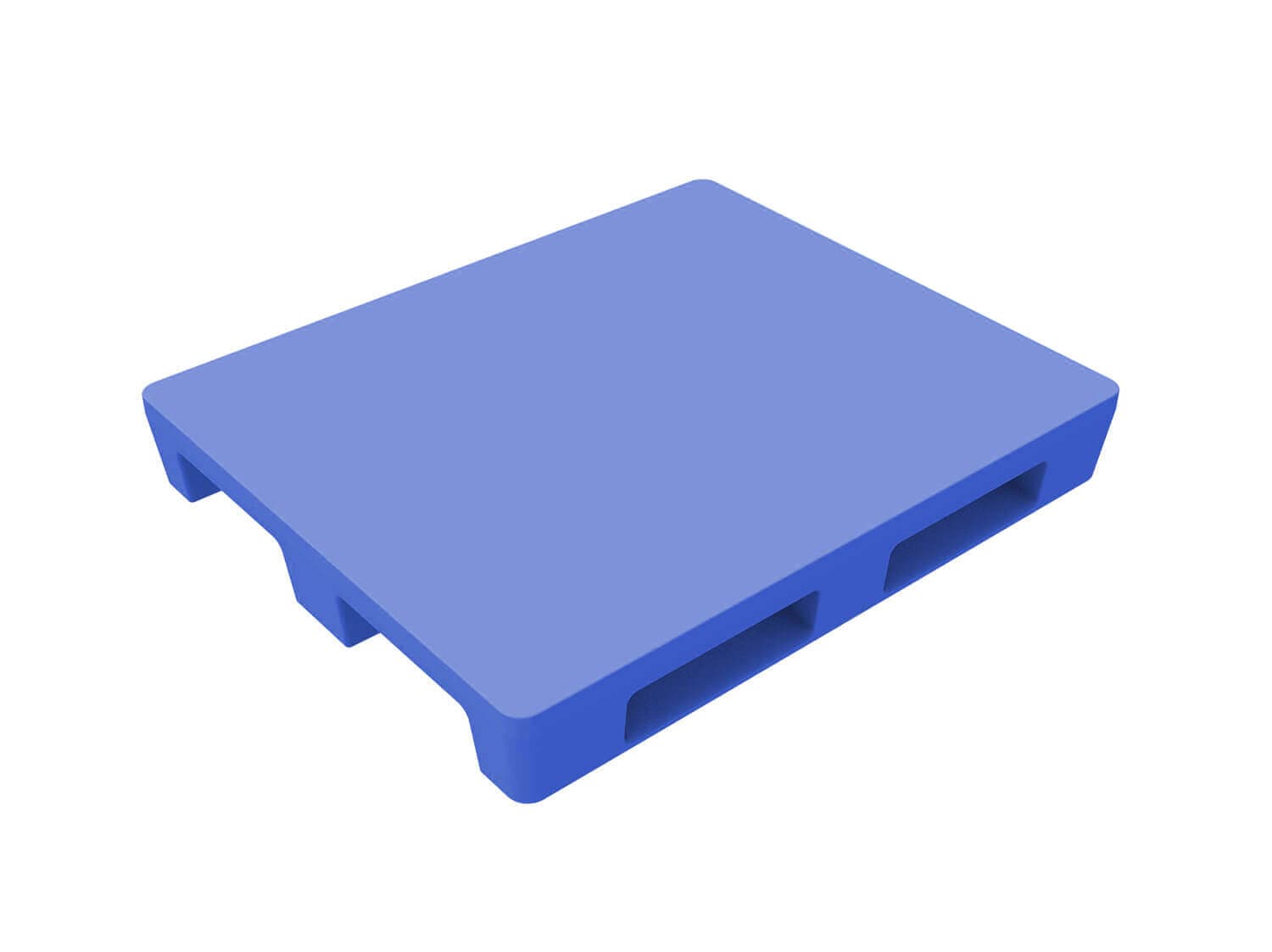
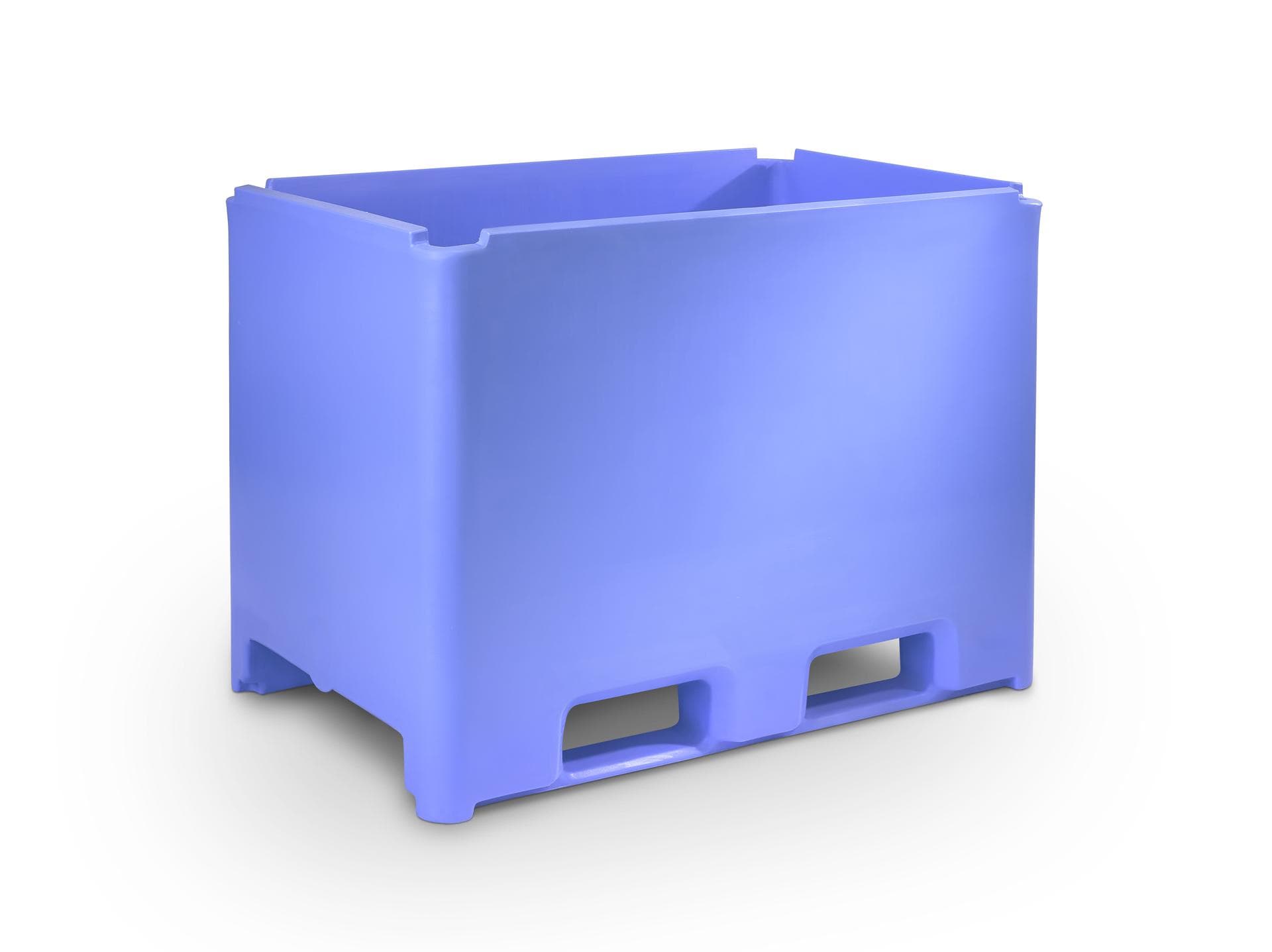
Dairies and cheese maturation facilities operate in a hygienically demanding triangle of moisture, salt and chemistry. Wood swells, stainless steel is heavy. Rotogal delivers purpose-built cheese maturation pallets (820 × 802 mm) and seam-free pallet boxes for salt baths and transport — in dimensionally stable polyethylene that holds up in 8-year ripening rooms.
cheese pallets with defined airflow
stable in long-term maturation at high humidity
max. box volume for curd, milk and whey batches
service life in long-term maturation rooms
Maturation, salt bath, transport — rugged PE solutions for dairy operations.
Cheese maturation has specific needs: consistent airflow, clean contact surfaces and resistance to salt brine. Our cheese maturation pallets offer defined spacing and a smooth surface with no moisture transfer. Pallet boxes from 220 to 1,435 litres move raw milk, curd and cream batches through the process without picking up or transferring odours.
Your benefit
- Cheese pallets 820 × 802 mm
Purpose-built for hard cheese maturation — with defined air circulation and a smooth, soil-releasing surface.
- Salt-bath compatible
Polyethylene is permanently resistant to saturated brine — no corrosion, no odour, no swelling.
- Up to 1,435 litre volume
From curd or whey interim storage to maturation chamber logistics, we cover every process size.
- Wet cleaning without detail work
Seam-free surfaces avoid mould pockets and biofilms even in long-term maturation cells.
Maturation rooms: airflow, humidity, microbiome
Cheese maturation is a microbiologically driven process where airflow, humidity and temperature jointly determine consistency, aroma and rind. Our cheese maturation pallets use a defined grid instead of a closed surface — air circulates from below to all sides. That prevents localised moisture pockets under the cheese.
A second critical factor is the surface microbiome. Wooden pallets carry an established microbiome of moulds and lactic-acid bacteria after 1–2 years, which is desirable for some varieties and problematic for others. Our PE pallets can be cleaned and disinfected without losing their surface structure — meaning you can run a rotation strategy (brie/camembert separate from hard cheese) with no cross-contamination.
For hard-cheese maturation rooms at ≥ 95 % RH and long-term ripening over 12 months, PE pallets stay mechanically stable with no swelling, mould attack or delamination. That makes them an auditable alternative to spruce-wood ripening boards, which are increasingly flagged in audits.
Brine, whey and chloride resistance
The most aggressive media in a dairy are brine (up to 22 % NaCl for hard cheese) and whey (pH 4.5–6.5 with lactic-bacterial activity). Both attack stainless steel through crevice corrosion and chloride stress-corrosion, especially at welds. Rotomoulded PE is chemically inert against both.
Our pallet boxes for curd, milk and cream batches are sealed and food-grade under EU 1935/2004 — they do not absorb fats from cream and do not release aromas to subsequent batches. In practice that matters when the same pool runs different recipes (yoghurt, quark, fresh cheese).
The internal geometry of all boxes is fully drained: no residual volume, no standing film. Combined with CIP-compatible cleaning heads we reach cycle times of 4–6 minutes per 1,000-litre box with repeatably validatable hygiene.
Transport and logistics across the dairy chain
Milk transport is time- and temperature-sensitive: fresh raw milk must be cooled to ≤ 6 °C within two hours of milking (EC Reg. 853/2004). Our insulated transport boxes hold a temperature change of < 2 K over 8 hours without active cooling — covering typical milk-pooling collection routes end to end.
For intra-logistics we rely on stackable pallet boxes with 220–1,435 litres. Outside dimensions match Euro-pallet footprint; four truck tiers stack safely (up to 4,000 kg static stack load per DIN EN ISO 12048).
A frequently overlooked advantage: our boxes are odour-neutral and do not absorb lactic aroma even after years. For premium products (buffalo mozzarella, goat curd, sheep-milk cheese) that is the difference between acceptable and audit-compliant production.
The workflow
- 1. Capture maturation and process data
Room climate, maturation duration, handling cycles and salt-bath chemistry are fully captured before engineering.
- 2. Cheese pallet or pallet box?
For hard cheese maturation we recommend our 820 × 802 mm pallet; for liquid batches and transport the pallet box up to 1,435 litres.
- 3. Tightness and airflow
Cheese needs defined airflow, whey needs tightness — we optimise the geometry for your maturation process.
- 4. Pilot loading
2–5 pallets or boxes in production — we accompany the first maturation cycles and handling.
- 5. Serial rollout
Once validated we produce the demand in batches; typical lead time 4–6 weeks per series.
- 6. Life-cycle monitoring
In maturation operation we regularly check dimensional accuracy and surface quality; take-back and recycling at end of life.
Common pitfalls & fixes
- Underestimating moisture compensation
If you're replacing old wood or steel at sustained high humidity: PE absorbs no water — make sure surrounding infrastructure is tuned to condensation-free PE surfaces.
- Brine concentration changes
No concern for saturated brine — for exotic maturation-bath chemistries (acids, enzymes), request material testing up front.
- Air-circulation spacing too tight
Don't stack cheese pallets too tightly — recommended stack height accounts for airflow for uniform maturation.

Relevant industries
Frequently asked questions
How do the pallets behave at 95 % humidity?
Polyethylene absorbs virtually no moisture. Dimensional stability and weight remain constant over years — even in maturation cells with high humidity.
Can the pallets fit into an existing maturation chamber setup?
Yes. For non-standard maturation racks or specific support geometries we manufacture custom solutions. We co-engineer with your production team and build CAD dummies before serial production.
More applications
Please note: All information on this page – in particular dimensions, technical data, material properties and application recommendations – is provided for general guidance only and is non-binding. The exact specifications tailored to your specific application are agreed on a binding basis as part of the quotation and order process.
Got a project?
Tell us about your requirement — we typically come back with a first assessment within 24 hours.