
Cleanroom & GMP logistics
Pallets and containers that do not compromise cleanroom classifications.
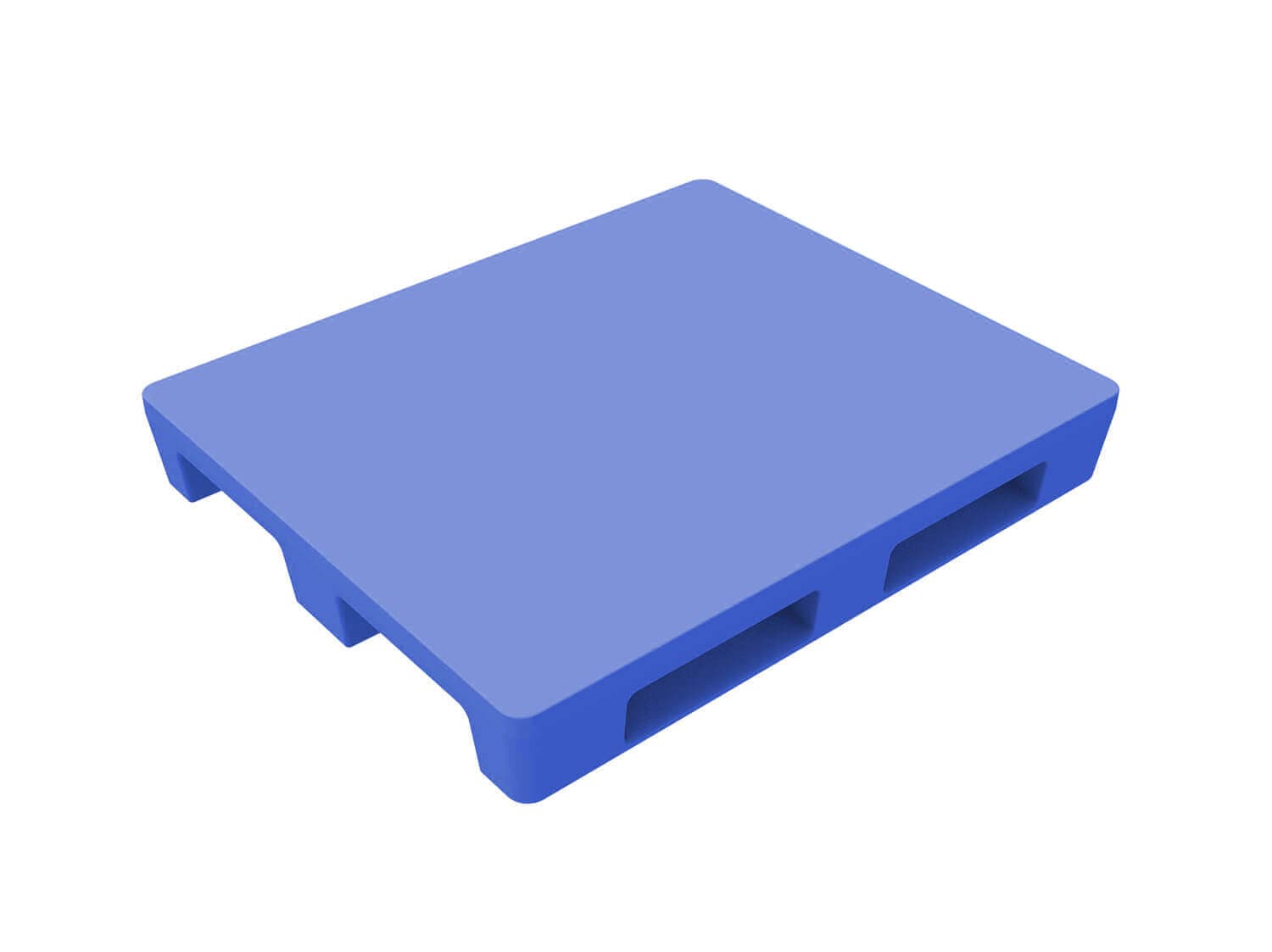
A single splinter, a wood fibre or a paint chip is enough to jeopardise a cleanroom qualification. Our rotationally moulded plastic pallets and containers are one-piece, non-porous and virtually abrasion-free — ideal as cleanroom transport for Grade C/D and as transition containers in the airlock.
directly usable in standard classifications
qualified for GMP core applications
no wood, paper or paint particles
decontaminable without surface degradation
Pallets and containers that do not compromise cleanroom classifications.
Typical applications: raw material staging in GMP Grade C, API intermediate storage, component handover to filling lines, return of contaminated items to the cleaning zone. Our plastic pallets have no wood or metal inserts, clean fully and are traceable via in-mould RFID or barcodes.
Your benefit
- Minimal particle shedding
Smooth, closed PE surfaces produce virtually no particles under normal handling.
- Validatable clean
Wipe and swab tests, sterilisation with H2O2 or VHP, and alcohol-based disinfection are possible without surface degradation.
- Traceability without stickers
In-mould RFID tags and embedded barcodes are part of the component geometry from day one — no adhesive labels to peel off.
- Cold chain ready
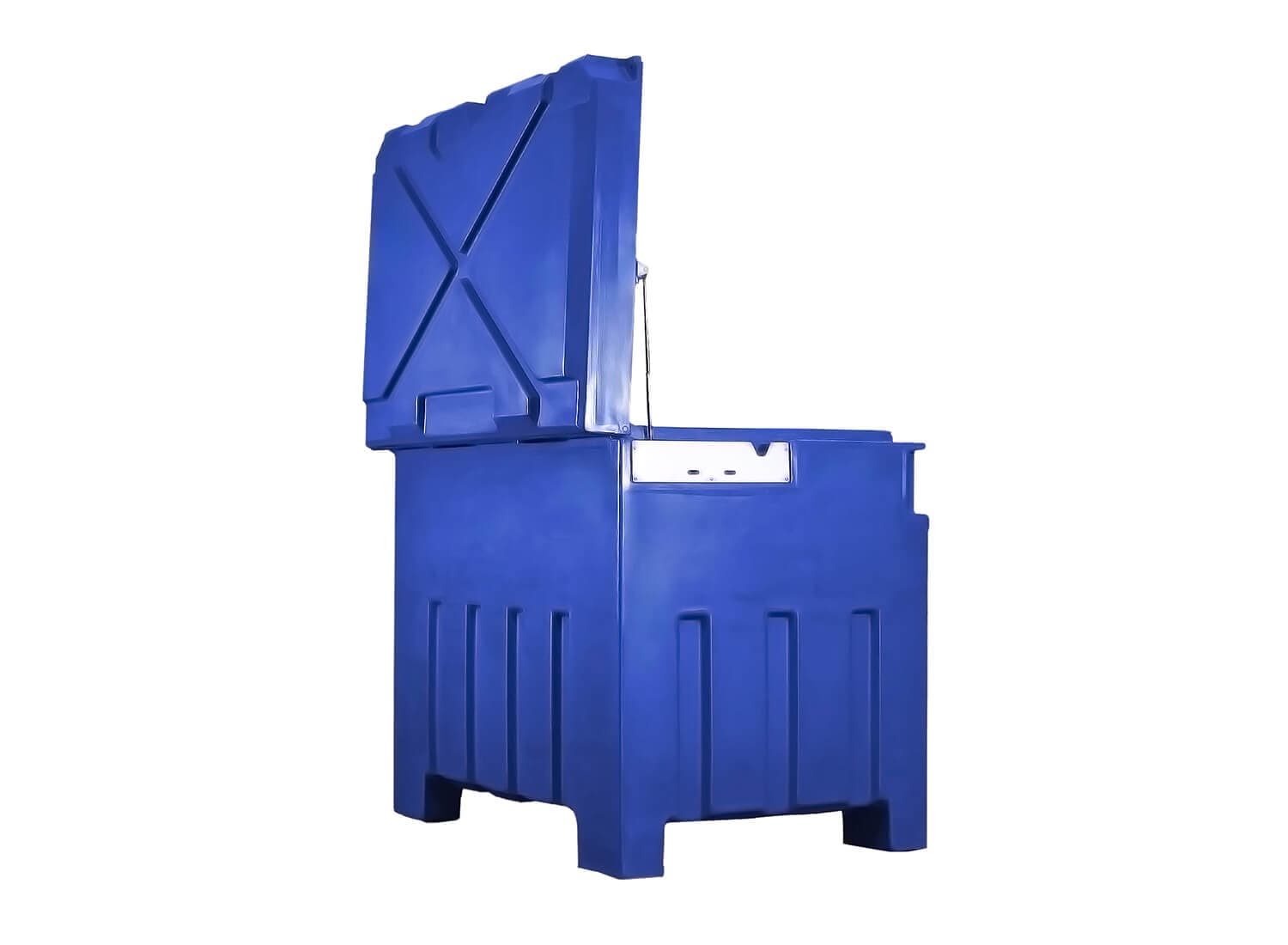
Combine cleanroom pallets with our dry ice boxes to transport temperature-sensitive API batches.
GMP Annex 1 (2023) and particle classes
The August 2023 revision of EU GMP Annex 1 sharply tightened material requirements in pharma and biotech cleanrooms. Any transport or storage aid used in Grade A/B must be low-particle, disinfectant-resistant and fully qualifiable. Our rotomoulded containers and trolleys are one-piece, with no welds, rivets or voids — exactly the target Annex 1 §4.14 describes.
For ISO 14644-1 classification the key question is how many ≥ 0.5 µm particles an aid emits in use. Wooden pallets are effectively excluded from Grade B/C; welded stainless trolleys shed metallic particles under friction. PE surfaces at Ra < 0.4 µm (on request) are within the validatable range — we can provide particle-abrasion data to ISO 14644-13.
A frequently missed point is electrostatic charging. Standard PE can accumulate up to 5 kV through friction and actively attract particles. For cleanroom applications we therefore supply ESD-conditioned PE with a surface resistance of 10⁶–10⁹ Ω — IEC 61340-5-1 compliant and validatable for electronics and pharma production.
Vaporized hydrogen peroxide (VHP) decontamination
VHP fumigation (vaporized hydrogen peroxide, typically 35 % H₂O₂) is the standard approach for room and surface decontamination in isolators and Grade A cleanrooms. Many plastics become brittle or discolour under VHP; our dedicated PE grades are validated for 500+ VHP cycles with no measurable mechanical degradation or migration.
The boxes and trolleys are equally resistant to isopropanol (70 % IPA), peracetic acid and quaternary ammonium compounds — the usual wipe disinfectants in cleanroom hygiene. That covers combined regimes where wipe disinfection is daily and VHP fumigation weekly or monthly.
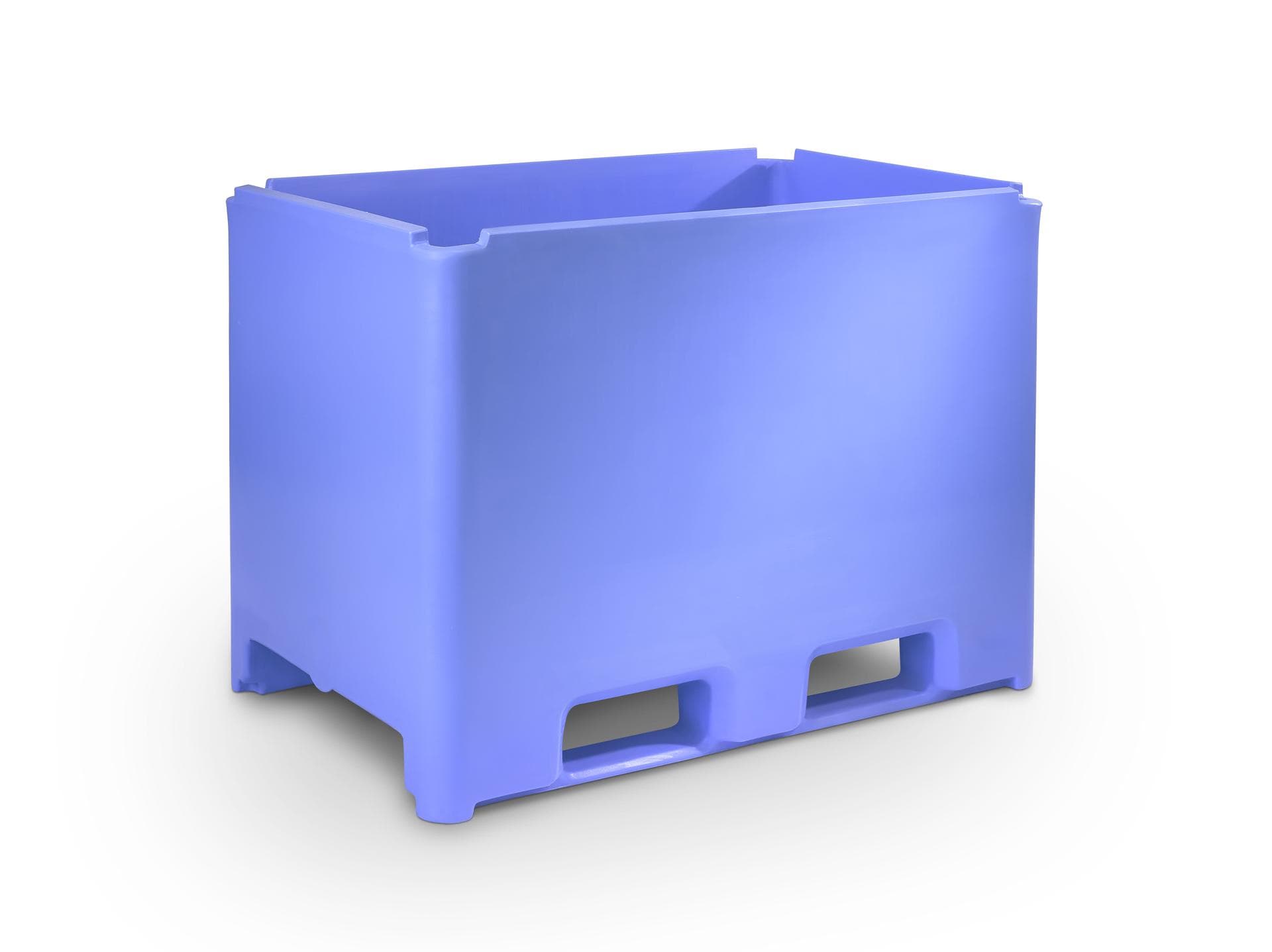
For isolator use and RABS (restricted access barrier systems) we supply boxes with sealed lids and no undercut geometry, so no H₂O₂ residue can collect in gaps. That shortens the aeration phase after decontamination and hence line downtime.
Qualification, documentation, 21 CFR Part 11
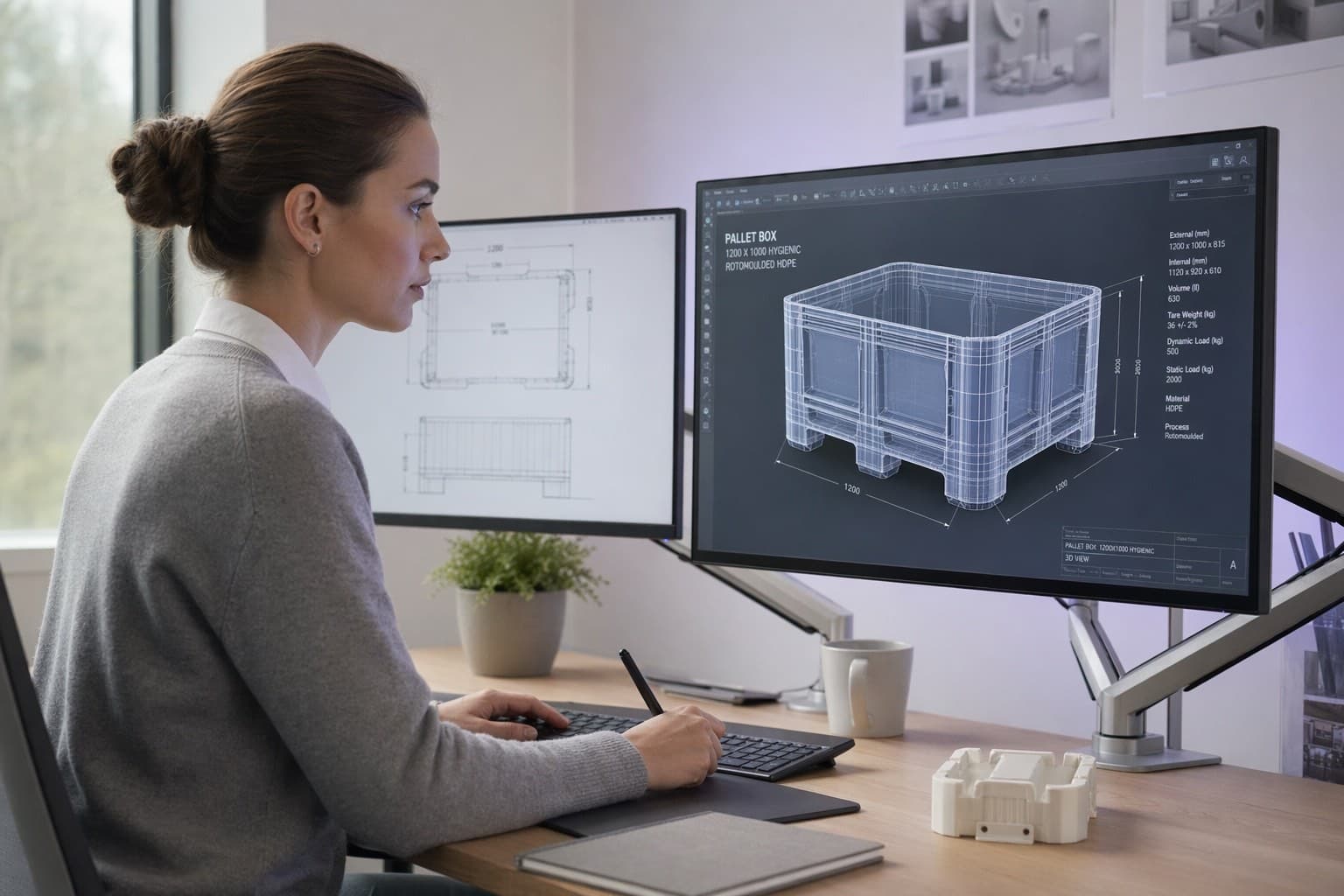
For pharma applications the qualifiability of the aid matters as much as the aid itself. Every cleanroom product can be supplied with a full qualification package: DQ (design qualification), IQ (installation qualification) and OQ (operational qualification) templates, material certificates (USP Class VI for product contact), migration analyses and cleaning validation.
For customers with 21 CFR Part 11 needs we provide unique laser-engraved serial numbers, Data-Matrix codes and documented batch traceability down to PE raw material. That supports track-&-trace requirements in regulated supply chains.
We pay particular attention to long-term resistance under gamma sterilization. For single-use bioprocess containers we offer a PE that retains > 85 % of its initial tensile strength after 50 kGy gamma — well above industry standard and enabling robust single-use logistics.
The workflow
- 1. Identify cleanroom class and zones
Grade C/D? Grade A/B with wipe-down? Transport route between airlocks? We define requirements before fixing geometry.
- 2. Material and surface choice
LMDPE for standard GMP, XLPE for sterile applications with gamma, special formulations for USP Class VI on request.
- 3. Design traceability
RFID (HF or UHF), barcode, moulded-in serial number — integration with your MES/SAP system planned from the start.
- 4. IQ/OQ support
We deliver material certificates, particle measurement protocols per ISO 14644-3 and documentation that accelerates your qualification.
- 5. Airlock pilot
Before full rollout: 2–5 pallets or boxes in the airlock zone; you verify cleaning process and particle monitoring.
- 6. Long-term monitoring
Annual status check on surface integrity, wipe samples and particle behaviour — we accompany the full life cycle.
Common pitfalls & fixes
- Skipping handling training
Even low-particulate pallets shed particles with incorrect handling (dragging, knocking) — operator training is part of the GMP rollout.
- Decontamination chemistry unclear
H2O2, VHP, peracetic acid, alcohol — each process has different long-term effects; we recommend material compatibility testing.
- RFID frequency vs. environment
HF (13.56 MHz) or UHF (868 MHz)? Stainless-steel environments attenuate UHF heavily — frequency choice must match your infrastructure.
Recommended products
Frequently asked questions
Which cleanroom classes are supported?
Directly usable in ISO 7/8 and GMP Grade C/D. For Grade A/B (ISO 5/6) we recommend wipe-down protocols and specific handling procedures before introduction into the core zone.
Can the pallets be sterilised?
Polyethylene tolerates H2O2/VHP decontamination, alcohol and most common cleanroom disinfectants. For gamma or autoclave scenarios we jointly select a suitable material variant (e.g. XLPE).
More applications
Please note: All information on this page – in particular dimensions, technical data, material properties and application recommendations – is provided for general guidance only and is non-binding. The exact specifications tailored to your specific application are agreed on a binding basis as part of the quotation and order process.
Got a project?
Tell us about your requirement — we typically come back with a first assessment within 24 hours.